
# Springer Spaniel vs Cocker Spaniel: Which Is Easier to Own?
There’s a common dilemma when choosing between these beloved spaniels. You want a companion that fits your lifestyle, but which one is truly easier to manage? This guide will help you understand the key differences, focusing on factors like their energy levels, grooming needs, and training complexities, so you can make the best decision for your home.
Key Takeaways:
* Springer Spaniels are larger and generally more energetic than Cockers, requiring more intense exercise and space.
* Cocker Spaniels typically need more frequent grooming due to their longer coats, making them prone to matting without regular care.
* Training can be easier with Springer Spaniels, as they often exhibit a stronger desire to please and a quicker grasp of commands. Cockers can be more independent and require consistent, patient training.
* Both breeds are generally healthy, but each has specific predispositions. Springer Spaniels may face hip or elbow dysplasia, while Cockers can be prone to ear infections and certain eye conditions.
* For busy families, the Cocker Spaniel’s slightly lower energy demands and smaller size might make them a more manageable option, provided grooming needs are met.
* Prospective owners should consider the energy output of each breed. Springers are better suited for active individuals or families who enjoy outdoor activities like hiking or running.
* Shedding levels are moderate for both breeds, but regular brushing helps manage loose hair and maintain coat health for both Springer and Cocker Spaniels.
Heritage and Breed Evolution
Understanding the historical trajectories of the Springer Spaniel and Cocker Spaniel offers valuable insight into their modern temperaments and needs. Both breeds share a common ancestry rooted in the larger land spaniels of Europe, but their paths diverged as breeders began selecting for specific working attributes. This historical context illuminates why you’ll find distinct differences in their energy levels, physical builds, and even their grooming requirements today.
Their shared lineage means both breeds possess an innate desire to please and a generally friendly disposition, traits that make them popular companions. However, the specialized roles they were bred for have left an indelible mark on their genetic makeup, influencing everything from their prey drive to their physical resilience. You can truly appreciate their individual characteristics by looking at the specific tasks they were designed to perform.
The Working History of the English Springer Spaniel
English Springer Spaniels earned their name from their distinctive method of “springing” game from cover for hunters. Breeders specifically selected for dogs with powerful legs and an intense drive to flush birds from dense undergrowth. This selective breeding resulted in a canine athlete built for endurance and speed over varied terrain.
You will find the Springer Spaniel’s conformation, characterized by a sturdy build and longer legs, directly reflects its historical role as a flushing dog. Their energetic nature and desire to work reflect this heritage, meaning they thrive with owners who can provide ample physical and mental stimulation.
The Refinement of the Cocker Spaniel
Cocker Spaniels were developed for a more specialized task: hunting woodcock, a smaller game bird. Breeders focused on creating a smaller, more compact spaniel capable of maneuvering through thick brush and retrieving downed birds in challenging environments. This selective process favored dogs with excellent scenting abilities and a gentle mouth for carrying game.
You will notice the Cocker Spaniel’s smaller size and slightly shorter legs are direct results of this breeding for specific hunting conditions. Their historical role required a dog that could work closely with a hunter, often in dense cover, leading to their generally more biddable and adaptable nature compared to their larger cousins.
This emphasis on working in close proximity to hunters also contributed to the Cocker Spaniel’s generally more affectionate and people-oriented temperament. They were bred to be attentive and responsive, traits that make them excellent family companions today. Their beautiful coats, while requiring regular grooming, also developed partly as protection from the elements during their hunting excursions.
Springer Spaniel vs Cocker Spaniel: Which Is Easier to Own?
Size and Stature: Springer Spaniel vs Cocker Spaniel
You will immediately notice a considerable difference in size when comparing a Springer Spaniel to a Cocker Spaniel. Springer Spaniels are the larger of the two, standing taller and possessing a more athletic build, reflecting their history as flushing dogs for larger game. They typically weigh between 40-50 pounds.
Cocker Spaniels, conversely, present a more compact and dainty appearance. Their smaller stature, usually weighing 20-30 pounds, makes them well-suited for smaller living spaces and families seeking a more lap-friendly companion.
Coat Care, Shedding, and Professional Grooming Needs
Both spaniel breeds boast beautiful, flowing coats that require consistent attention to maintain their health and appearance. You will find that both shed moderately year-round, with increased shedding during seasonal changes. Regular brushing is necessary to prevent mats and tangles, which can quickly become painful for your dog if neglected.
A Cocker Spaniel’s coat is often denser and silkier, particularly around the ears, chest, and legs, demanding more frequent brushing to prevent matting. Springer Spaniels have a slightly coarser, often straighter coat, but their feathering also requires diligent care. You should anticipate professional grooming every 6-8 weeks for both breeds to keep their coats tidy and healthy, especially around their ears and paws.
You must commit to a routine of brushing several times a week, ideally daily, to manage shedding and prevent knots from forming. Neglecting their coats can lead to severe matting, necessitating painful and expensive dematting or even shaving by a professional groomer. Regular grooming also allows you to check for skin irritations or parasites, ensuring your spaniel remains comfortable and healthy.

Springer Spaniel vs Cocker Spaniel: Which Is Easier to Own?
Evaluating Social Stability and Affection Levels
You will find both Springer and Cocker Spaniels are incredibly affectionate breeds, eager to please their human companions. However, your Springer Spaniel often displays a more overt and demonstrative affection, always ready for a game or a cuddle. You will find that your Cocker Spaniel, while deeply loving, can sometimes be a little more reserved, forming strong bonds with a select few family members.
Their social stability also differs slightly; Springer Spaniels generally adapt well to various social situations, often greeting strangers with enthusiasm. Your Cocker Spaniel may exhibit a degree of shyness around unfamiliar people or environments, requiring more careful socialization to prevent potential anxiety or fear-based reactions. Both breeds crave companionship, so leaving either alone for extended periods can lead to undesirable behaviors such as excessive barking or destructive chewing.
Suitability for Families: Cocker or Springer
Choosing between a Cocker and a Springer for your family depends heavily on your lifestyle and the time you can dedicate to your new companion. Your Springer Spaniel’s higher energy levels mean they thrive in active households that can provide ample exercise and mental stimulation. They are often excellent companions for older children who enjoy outdoor activities.
Your Cocker Spaniel, with their slightly lower exercise requirements, can be a better fit for families with younger children or those who prefer a more relaxed pace. Their smaller size also makes them more adaptable to smaller living spaces. Both breeds are known for their gentle nature, but supervision is always key when children are interacting with any dog.
Consider your family’s routine and how much time you can realistically commit to training and exercise. A busy family with limited time for daily walks might struggle with a Springer’s need for activity, potentially leading to a frustrated and destructive dog. A family seeking a dog that can join them on long hikes and outdoor adventures will find a Springer an ideal partner. Conversely, a family looking for a loving companion happy with shorter walks and plenty of indoor playtime might lean towards a Cocker. Their smaller size and slightly less intense energy make them a more manageable option for some households, especially those with less experience with high-energy breeds.
Springer Spaniel vs Cocker Spaniel: Which Is Easier to Own?
Energy Levels and Exercise Demands
Sustaining the High-Drive Springer Spaniel
You will discover that Springer Spaniels possess an almost boundless energy supply, demanding significant daily exercise to remain content and well-behaved. These dogs thrive on activity, requiring at least 60-90 minutes of vigorous exercise daily, ideally including off-leash running, fetching, or structured training sessions. Without adequate outlets, a Springer can quickly become bored, leading to destructive behaviors like excessive barking or chewing.
Consider their historical role as gun dogs; they were bred to work tirelessly in the field. This inherent drive means a short walk around the block simply won’t cut it. To truly understand the intensity, you might want to read more about these “hunting machines” in Breed Battles: Springer Spaniel vs. English Cocker.
Managing the Activity Requirements of the Cocker Spaniel
Cocker Spaniels, while still active, generally have more moderate exercise requirements compared to their Springer cousins. They typically need 30-60 minutes of daily activity, which can include brisk walks, playtime in a securely fenced yard, or short games of fetch. These smaller spaniels are often more adaptable to apartment living, provided their daily exercise needs are consistently met.
You will find a Cocker Spaniel is often satisfied with a good romp in the park or a long walk exploring new scents. Their smaller size makes them easier to tire out, making them a more manageable option for individuals or families who may not have hours to dedicate to intense outdoor activities every single day. Their sweet nature makes them a joy to train, further enhancing their manageability.
A Cocker Spaniel’s exercise needs can often be integrated into a busy family’s routine without feeling like a major undertaking. They enjoy interacting with their family and are often happy to participate in whatever activities you are doing, whether it’s a walk around the neighborhood or a game of tug-of-war indoors. Just ensure you provide consistent mental stimulation alongside physical exercise to prevent boredom.
Intelligence and Ease of Training
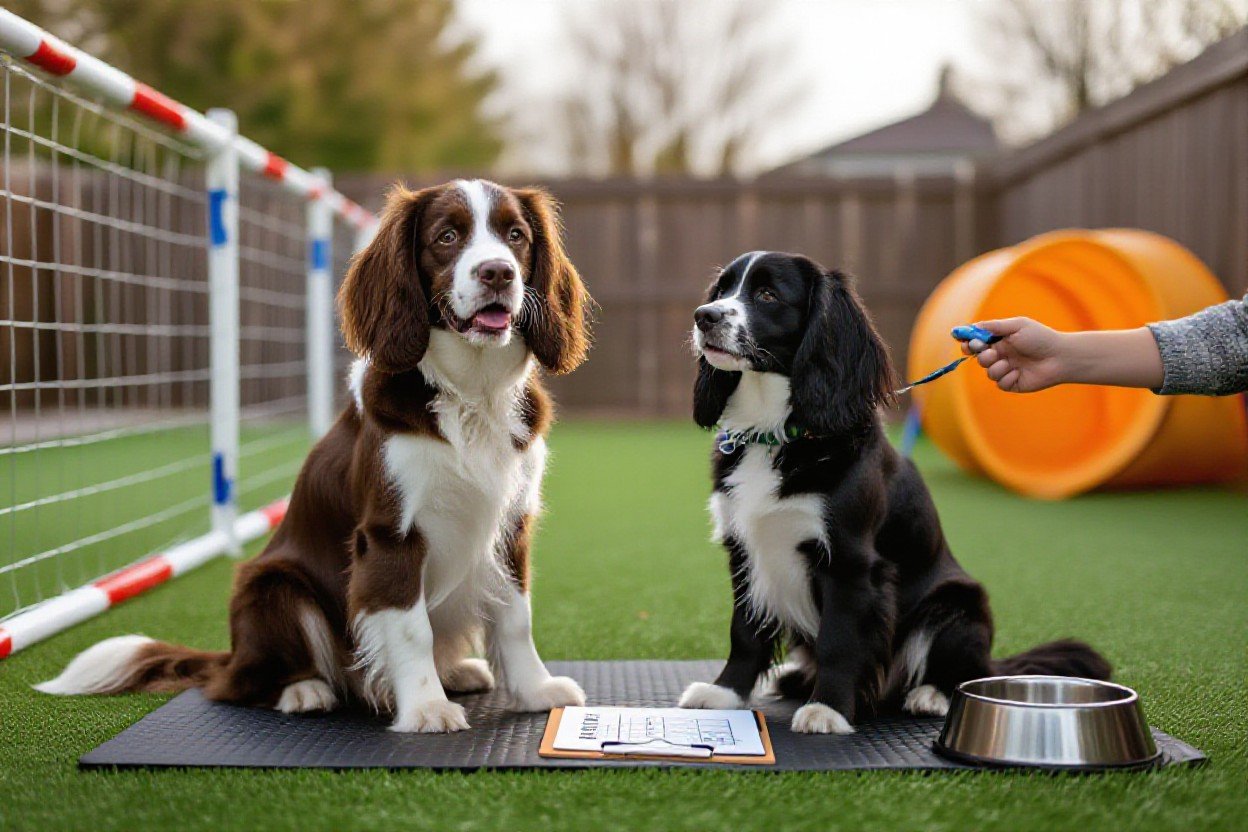
Many prospective owners wonder about the intelligence of these two beloved spaniel breeds. You might even have seen discussions like “Hi all new to this group what’s difference from a spring…” on forums, highlighting the common curiosity about their distinct traits. Both Springers and Cockers are intelligent dogs, eager to please, which makes them generally receptive to training. However, their specific working histories influence how this intelligence manifests and how easily you might find them to train.
Obedience and Working Intelligence Comparison
You will find both breeds eager learners, but their inherent drives differ.
Obedience and Working Intelligence
| Springer Spaniel | Cocker Spaniel |
| :————— | :————- |
| Often excels in obedience and agility due to their strong desire to work and retrieve. | Highly intelligent and capable, but their sensitive nature can make them more prone to emotional responses during training. |
Your Springer will likely embrace training with enthusiasm, often seeking out tasks. The Cocker, while equally smart, sometimes requires a gentler touch and more positive reinforcement.
Behavioral Management and Socialization Strategies
Effective socialization is paramount for both breeds to develop into well-adjusted companions. You should expose your puppy to various sights, sounds, people, and other animals from a young age. Early positive experiences will help prevent potential behavioral issues down the line.
Consistent training and clear boundaries are also important for managing their inherent instincts. You will find that both breeds benefit from structured routines and plenty of mental stimulation. This proactive approach helps to channel their intelligence and energy positively, reducing the likelihood of unwanted behaviors emerging.
You need to understand that without proper socialization and consistent training, both Springers and Cockers can develop undesirable habits. A lack of early exposure can lead to shyness or reactivity, while insufficient mental engagement might result in destructive behaviors or excessive barking. You must be prepared to invest time in their development to ensure they grow into confident, well-behaved members of your family.

Health Profiles and Lifespan
Common Genetic Conditions in Spaniels
You will find both Springer Spaniels and Cocker Spaniels share some predisposition to certain genetic conditions, a common thread among many purebred dogs. Both breeds can be prone to hip and elbow dysplasia, conditions affecting joint development and potentially leading to arthritis. Eye conditions, such as Progressive Retinal Atrophy (PRA) which can cause blindness, also appear in both breeds.
Your prospective puppy’s breeder should provide health clearances for their breeding stock, ensuring they test for these inherited diseases. You can significantly reduce the risk of your spaniel developing these issues by choosing a responsible breeder.
Longevity and General Wellness Factors
Spaniels generally enjoy a long and healthy life when properly cared for. Their average lifespan typically ranges from 12 to 14 years, though some individuals live even longer. Factors like diet, exercise, and regular veterinary check-ups play a monumental role in their overall well-being.
Providing your spaniel with a high-quality diet appropriate for their age and activity level supports their health from the inside out. Your vet can recommend the best food choices for your specific dog.
* Regular exercise is paramount for both mental and physical health.
* Preventative care, including vaccinations and parasite control, guards against common illnesses.
* Dental hygiene prevents painful and dangerous infections.
* Maintaining a healthy weight reduces strain on joints and organs.
Any sudden changes in behavior or appetite warrant a visit to the veterinarian.
Conclusion
Following this examination, you understand that selecting between a Springer Spaniel and a Cocker Spaniel depends entirely on your lifestyle and expectations. While both breeds offer companionship and joy, their distinct needs in terms of size, energy, grooming, and training make one a better fit for you than the other. Consider your family’s activity level, the time you can dedicate to exercise, and your willingness to commit to regular grooming before making your decision.
You now have the insights to determine which spaniel will integrate most smoothly into your home. A Springer Spaniel might be ideal if you lead an active life and enjoy outdoor adventures. A Cocker Spaniel could be your perfect companion if you prefer a slightly more compact dog with a gentle disposition, provided you are ready for consistent grooming. Your choice will bring a loving and loyal member into your family.
FAQ
Q: How do the size and energy levels of Springer Spaniels and Cocker Spaniels compare, and which might be better for different living situations?
A: Springer Spaniels are generally larger and more energetic than Cocker Spaniels. An adult Springer typically weighs between 40-55 pounds and stands 19-20 inches tall. They possess a high drive and need significant daily exercise, including long walks, runs, or active play sessions. Their stamina makes them well-suited for active individuals or families who enjoy outdoor activities like hiking or jogging. A Springer Spaniel thrives in homes with a yard or easy access to open spaces where they can burn off energy.
Cocker Spaniels are smaller, usually weighing 20-30 pounds and standing 14-15 inches tall. While they are still active dogs, their energy requirements are more moderate. Daily walks and playtime in a yard are usually sufficient to keep a Cocker happy. Their smaller size and slightly lower energy make them more adaptable to apartment living, provided they receive consistent exercise and mental stimulation. Owners considering either breed should assess their own lifestyle and living environment to ensure they can meet the dog’s physical needs.
Q: What are the differences in grooming requirements and shedding between Springer Spaniels and Cocker Spaniels?
A: Both Springer Spaniels and Cocker Spaniels have beautiful coats that require regular grooming, but there are some distinctions. Springer Spaniels have a medium-length double coat that sheds moderately year-round, with heavier shedding seasons. Their feathering on the legs, chest, and belly can tangle, necessitating brushing several times a week to prevent mats. Professional grooming every 6-8 weeks helps maintain their coat’s health and appearance, often involving trimming around the ears and feet.
Cocker Spaniels possess a longer, silkier coat, particularly on their ears, legs, and undercarriage. This coat is prone to matting and tangling, demanding daily brushing to keep it free of knots. Cocker Spaniels are also moderate to heavy shedder. Many Cocker owners opt for professional grooming every 4-6 weeks to manage their coat length, especially around their ears and eyes, which can help prevent infections and maintain hygiene. Owners should be prepared for the time commitment involved in keeping either breed’s coat in good condition.
Q: Is one breed significantly harder to train than the other, and what training approaches work best for each?
A: Neither breed is inherently difficult to train, as both are intelligent and eager to please. Springer Spaniels are highly intelligent and respond well to consistent, positive reinforcement training. Their working dog background means they enjoy having a job to do, making them excel in obedience, agility, and scent work. They can be prone to boredom if not mentally stimulated, which might lead to undesirable behaviors. Early socialization and consistent training from puppyhood are beneficial for a well-adjusted Springer.
Cocker Spaniels are also intelligent and generally amenable to training. They can be more sensitive than Springers, so gentle, positive reinforcement methods are most effective. Harsh corrections can make a Cocker shut down or become anxious. Like Springers, Cockers benefit from early socialization and consistent training. They enjoy learning new tricks and participating in activities that engage their minds, such as canine good citizen classes or basic obedience. Owners will find both breeds respond well to training when it is made fun and rewarding.
Q: What are the primary health considerations for Springer Spaniels versus Cocker Spaniels, and what should prospective owners know?
A: Both breeds can be prone to certain genetic health conditions, so responsible breeders screen their dogs. Springer Spaniels can be susceptible to hip and elbow dysplasia, eye conditions like progressive retinal atrophy (PRA), and ear infections due to their floppy ears. They may also develop conditions such as phosphofructokinase deficiency, a metabolic disorder.
Cocker Spaniels share some health concerns with Springers, including hip dysplasia and various eye conditions, such as cataracts and glaucoma. They are also prone to ear infections due to their long, pendulous ears, which trap moisture and debris. Additionally, Cockers can be predisposed to certain heart conditions, like dilated cardiomyopathy, and autoimmune diseases. Prospective owners should always ask breeders about health clearances for the parents of any puppy they consider, verifying that appropriate tests have been conducted.
Q: Which spaniel breed is generally a better fit for busy families, considering their needs and temperaments?
A: A Cocker Spaniel may be a slightly better fit for busy families due to their more moderate energy levels and smaller size. They are adaptable and can thrive in various living situations, including apartments, as long as they receive their daily walks and playtime. Their affectionate nature makes them wonderful companions for children and adults alike. A family with a busy schedule can typically meet a Cocker’s exercise needs more easily than a Springer’s.
Springer Spaniels require a greater commitment to exercise and mental stimulation. A busy family might struggle to provide the extensive physical activity a Springer needs to prevent boredom and destructive behaviors. While Springers are also loving and good with children, their high energy means they need an active family that can dedicate significant time to outdoor adventures and training. Families considering a Springer must be prepared for a dog that needs to be an active participant in their lifestyle.