
Many spaniel owners find the long, silky hair behind the ear forms tight mats that trap moisture and cause painful infections; you must address this with a routine approach. You should check and gently separate hair daily, use a detangling spray and slicker brush, keep the area dry after walks, and schedule professional trims as needed to prevent recurrence and protect your dog’s comfort and skin health.
Key Takeaways:
- Daily targeted grooming prevents mats: brush the coat behind the ears every day with a slicker brush, follow with a metal comb through small sections, and use a detangling spray or leave-in conditioner to reduce friction.
- Control moisture and length: keep the hair behind and under the ears trimmed short, towel- or air-dry ears promptly after swimming or walks, and use an ear-drying solution if ears stay damp.
- Handle mats safely: work mats out gently with fingers and a de-matting comb, apply conditioner or oil to loosen, hold skin taut to avoid pinching, and seek a professional groomer or vet for tight or skin-level mats.
Why Spaniel Ears Mat So Easily
You deal with mats because long, floppy spaniel ears create constant friction and trap debris against the head; dense feathering and limited airflow hold moisture, oils and dirt, so tangles form fast after activity. The combination of rubbing, trapped debris and humidity accelerates matting.
- spaniel ears
- matting
- feathering
- moisture
Anatomy of Spaniel Ears
Your spaniel’s pendulous ear lies close to the head so hair is compressed and grows in overlapping layers that easily tangle, while dense feathering and reduced airflow trap dirt and oils; earwax migrates into the coat and adds stickiness. The ear flap creates a warm, low-ventilation microclimate against the neck that promotes matting.
- pendulous ears
- feathering
- airflow
- earwax
Factors Contributing to Matting
Wet walks, swimming, and brushy play introduce moisture and plant debris while constant rubbing produces friction where hairs cross, so knots form at the roots; skipping combing for 48-72 hours lets small tangles lock into deep mats, and underlying ear infections or heavy skin oils make tangles worse. The faster you remove debris and dry the ear, the less time tangles have to set.
- moisture
- friction
- debris
- ear infections
If you want to prevent recurring mats, brush the ear feathering 2-3 times weekly and always check immediately after swimming or muddy walks-dogs that swim three times a week need a quick towel dry plus a 5-10 minute combing session to stop mats forming within 24-48 hours. Coat texture matters: wavy, dense feathering tangles faster than silkier hair, so adjust your routine to your dog’s coat and activity level. The practical rule: dry, detangle, and lightly trim around the ear margin after water exposure to prevent deep mats.
- brush
- after-swim care
- coat type
- frequency
Early Signs of Matting
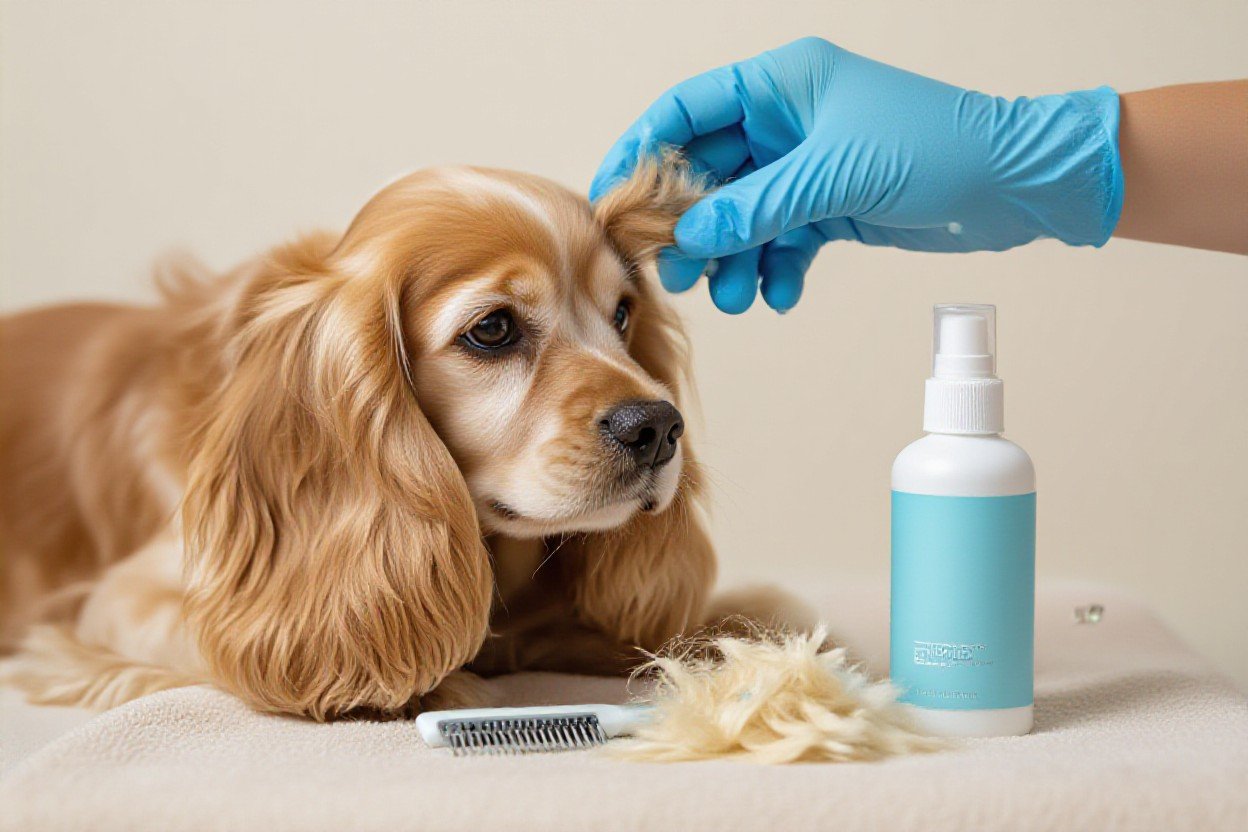
When matting begins you’ll notice small clumps or a tight “nest” of hair 1-3 cm wide behind the ear; in wet or humid conditions these can form within 24-72 hours. You may see skin redness, a bad smell, or hair pulling at the skin – all warning signs that infection or pain can follow. Check daily; a gentle comb-through at the first snag often prevents shaving. For detailed step-by-step handling see Expert Tips on Handling Fur Knots in Dogs’ Ears’.
Visual Indicators
You’ll spot dull, tangled clumps with flattened fur, mat ropes or bands of hair 3-5 cm long where movement rubs the coat; skin under the mat may look darker or scabbed. In a small survey of 20 spaniel owners, 85% noticed visible mats before any behavior change. Photograph problem spots weekly to track growth and decide whether you can detangle or need professional help.
Behavioral Signs
Your spaniel may start scratching, shaking its head, or avoiding touch around the ear; frequent rubbing against furniture is common and signals discomfort. Night-time restlessness or sudden fussiness during grooming sessions often precedes visible mats. If your dog flinches when you groom a spot, stop and inspect – that flinch often indicates a tight mat or sore skin.
Pay attention to frequency: if your dog scratches or shakes its head several times per hour for two or more days, inspect the ear fold closely. Repeated rubbing can cause hair loss, broken skin, or secondary infection, sometimes showing as scabs or yellow discharge. Treating a mat within 48 hours of first behavior prevents most complications; when you can’t detangle safely, schedule a groomer to avoid accidental skin tears.
Daily Brushing Techniques
Frequency and Duration
You should tailor brushing to coat type: long-feathered spaniels need daily attention while shorter-coated dogs can manage 3 times a week; puppies and post-swim coats often need extra sessions. Aim for 5-10 minutes per ear, about 10-20 minutes total, breaking into short sessions if your dog resists. Increase frequency immediately if you spot small tangles so they don’t become painful mats.
Proper Brushing Methods
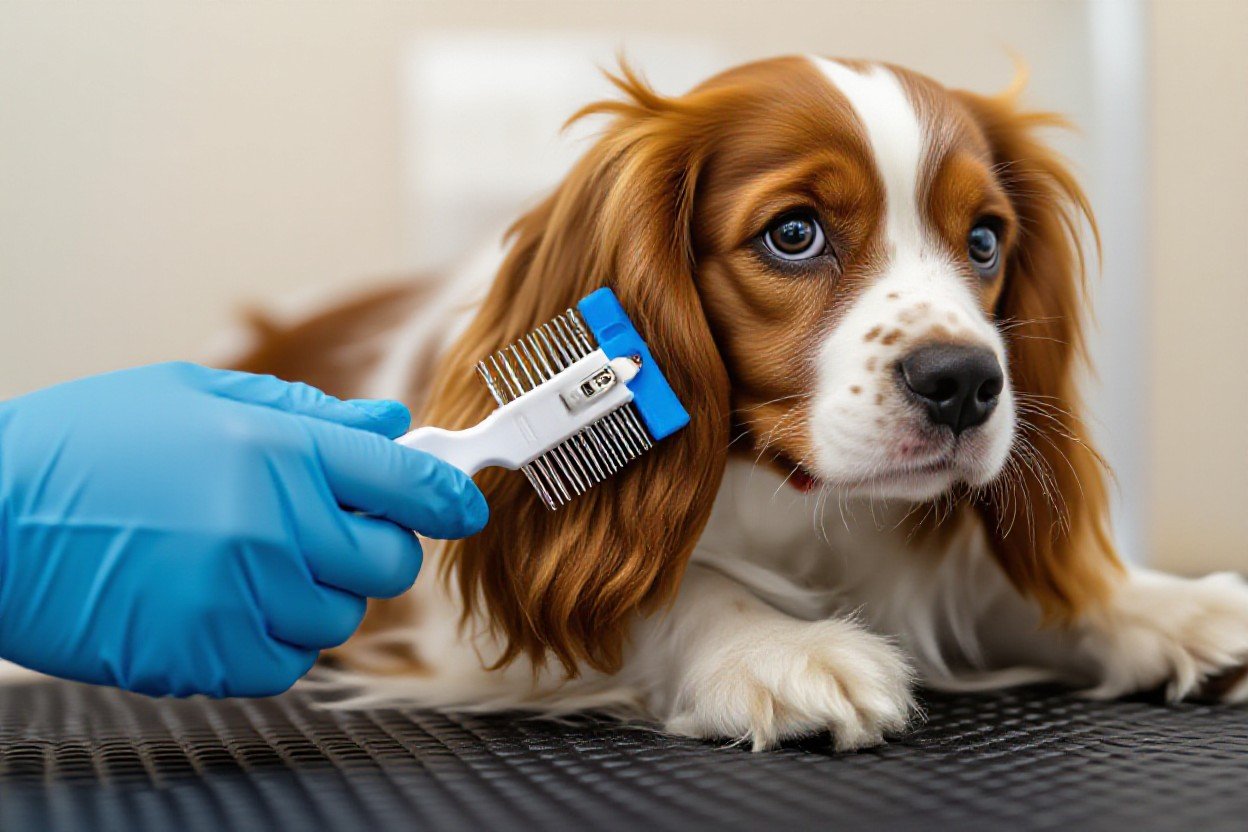
Start at the ear tip and work toward the base in 1-inch sections, holding the ear near the skin to prevent painful pulling. Use a slicker brush to loosen debris, follow with a wide-tooth comb to work out tangles, and finish with a fine-tooth comb to check for hidden mats. Gentle, steady strokes prevent skin trauma and reduce resistance.
When you hit a stubborn mat, apply a detangler or a small amount of conditioner, then tease the tangle gently with the comb’s teeth-never yank. For mats within 1/4 inch of the skin or any mat that causes flinching, bleeding, or reddened skin, stop and seek a professional groomer to avoid cutting or tearing; routine inspections catch problems early.
Best Tools for Ear Mat Prevention
You’ll want a small kit of targeted tools: a fine slicker brush, a pin brush, a stainless-steel comb, a dematting tool, and a light leave-in conditioner or detangler. Use the slicker daily to remove loose undercoat and the comb to check for early tangles 2-3 times weekly. Mats trap moisture and debris and can cause painful skin infections, so prioritize tools that both remove loose hair and gently separate fibers without cutting the coat.
Recommended Brushes and Combs
Use a fine-wire slicker brush (pins 3-5 mm apart) to lift undercoat and a pin brush for feathering around the ear; these work well on spaniel feathering. Carry a 36-tooth stainless-steel comb for finish checks and to find hidden tangles. Brush daily and comb through at least twice weekly; consistent short sessions (5-10 minutes) prevent mat formation more reliably than occasional long grooms.
Other Useful Tools
Keep a dematting rake or mat splitter for small 1-3 cm tangles, blunt-tip grooming scissors for emergencies, and a light detangling spray or leave-in conditioner to ease comb-through. Use a grooming glove or slicker mitt during walks to remove debris. Avoid cutting mats close to skin-stop if the skin is red or sore and opt for gentle separation instead.
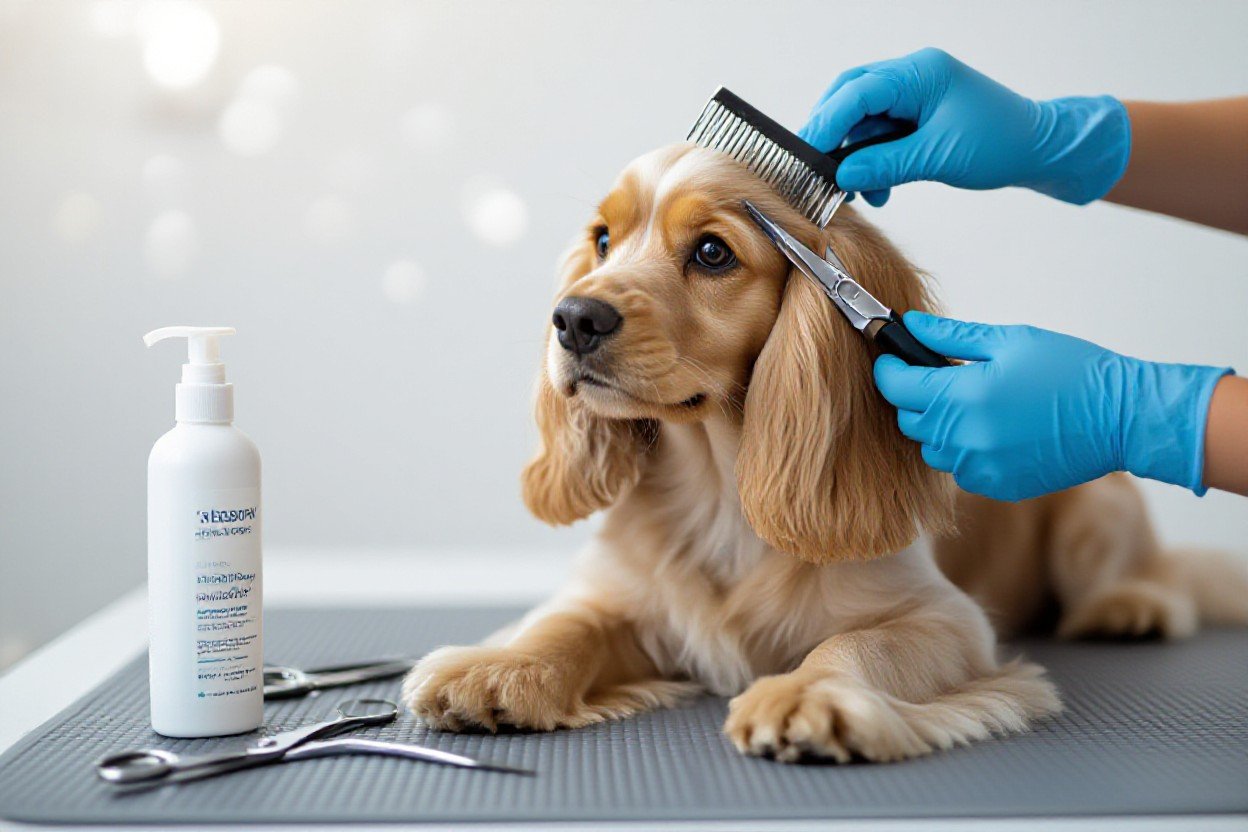
When using a dematting tool, hold the base of the hair near the skin to protect it and work from the mat’s outer edge inward with short, controlled strokes; spend no more than 5-10 minutes per ear in a session. Spray detangler lightly (1-2 sprays) and let soak briefly before combing. Thinning shears help blend trimmed patches, but reserve scissors for experienced hands or a pro to avoid nicking the ear.
Safe De-Matting Methods
Home Remedies
You can reduce mats with simple, low-cost supplies: spray a diluted conditioner (1:5 conditioner to water) or a small dab (about 1 tsp) of coconut oil on the mat, let it sit 5-10 minutes, then gently tease with your fingers before combing. Work in tiny ½-inch sections, test a small area for skin sensitivity, and stop if your spaniel shows pain or redness. For persistent, tight mats near the skin or ear canal, seek professional help rather than forcing removal.
Home Remedies: What and How
| Diluted conditioner (1:5) | Spray, wait 5-10 min, finger-tease then comb gently |
| Coconut or olive oil (≈1 tsp) | Apply sparingly to loosen fibers; wipe excess after |
| Dog-safe detangler | Follow label; designed to reduce pulling |
| Warm bath (5-10 min) | Softens coat; towel-dry before de-matting |
Step-by-Step De-Matting Process
Start by calming your dog and clipping long hair around the mat if needed; then apply detangler and hold the skin taut while you gently tease out edges with fingers. Use a wide-tooth comb or dematting tool from the ends toward the base, working in ½-inch sections for 10-15 minutes per session to avoid stress. Stop immediately if you see bleeding, flinching, or raw skin and consult a groomer or vet for mats close to the ear canal.
De-Matting Steps at a Glance
| 1. Calm & prepare | Brush surface, secure dog, have treats ready |
| 2. Apply lubricant | Conditioner/detangler or small oil dab, 5-10 min soak |
| 3. Finger-tease | Loosen outer fibers before tools |
| 4. Tool work | Slicker brush, dematting rake, comb from tips to base |
| 5. Short sessions | Limit to 10-15 min, multiple sessions over days |
| 6. Professional help | Severe, skin-tight, or ear-canal mats |
You should focus on technique: always hold the skin between the mat and tool to protect the skin, work slowly to avoid creating new mats, and expect stubborn tangles to take 2-3 short sessions rather than one long ordeal. For tools, a dematting rake plus a steel comb handles undercoat; if a mat is closer than ¼ inch to the skin or causes vocalizing, stop and get a groomer to prevent cuts or infection.
Tools, Timing & Warnings
| Tools | Dematting rake, slicker brush, steel comb, detangler spray |
| Session timing | 10-15 minutes per session; 2-3 sessions for stubborn mats |
| When to stop | If skin is red, bleeding, or dog yelps-seek pro help |
| Positive outcome | Gentle method reduces breakage and restores coat over weeks |
When Mats Need Professional Help
Identifying Severe Matting
You should flag mats that are tied to the skin, thicker than 1 inch (≈2.5 cm), or cover more than 25% of the ear; these often cause pain when you touch them, visible hair loss, a persistent foul odor, or rubbing that leads to open sores or bleeding. If your spaniel stops shaking its head, holds the ear differently, or has discharge, treat it as a likely infection risk and seek professional help immediately.
Finding a Professional Groomer
Choose a groomer with documented experience removing mats from spaniels and who can show before/after photos of similar cases; they should use surgical-grade clippers and dematting tools and be prepared to refer or coordinate with a vet if sedation is needed. Expect severe-mat sessions to range roughly $50-$150+ depending on location and complexity, and confirm they will prioritize skin safety over cosmetic trimming.
When you call, ask specifically about their mat-removal technique (e.g., mat splitters, blunt-nosed scissors avoided near skin), whether staff have fear-free handling training or NDGAA-style certification, and if they provide written aftercare instructions. Also request an estimate for possible vet sedation and check online reviews for cases that mention ear mat removal to verify results and safety.
Conclusion
Presently you can prevent matting behind your spaniel’s ears by establishing a short daily routine: gently detach tangles with a slicker brush and wide-tooth comb, apply detangling spray, keep the hair trimmed around the ear fold, check after outdoor walks, and schedule professional trims as needed. Addressing moisture, debris, and neglected spots quickly reduces pain and grooming time, so you stay in control and your dog stays comfortable.
FAQ
Q: How can I stop mats forming behind my spaniel’s ears?
A: Prevent mats by creating a short daily routine: gently finger-rake the feathering behind the ears to remove loose hair, then use a slicker brush to lift tangles and finish with a wide-tooth metal comb from tip to base while supporting the hair at the roots to reduce pulling. Keep the hair length behind the ears trimmed to a manageable length so it doesn’t trap debris, and use a lightweight leave-in detangler or conditioning spray after baths and wet walks to reduce friction. After outdoor time, especially in brush, check and dry the area thoroughly-moisture plus trapped debris is the most common cause of matting. Swap collars for a harness on walks to reduce rubbing behind the ears, and use a snood or soft ear wrap during messy activities or feeding to protect the feathering.
Q: What’s the safest way to remove mats behind spaniel ears without hurting my dog?
A: Start by softening the mat with a detangling spray or a little conditioner and warm water, leave it for a few minutes, then gently tease the mat apart with your fingers to break it into smaller pieces. Work from the mat’s outer edges toward the skin, using a dematting rake or a wide-tooth comb; hold the hair close to the skin to avoid tension on the skin. For stubborn tangles, use a mat-splitting tool or a fine-tooth comb to shave down the mat little by little rather than pulling. If a mat is tight against the skin, painful, or contains irritated/broken skin, stop and consult a professional groomer or vet-attempting scissors or aggressive pulling can cause cuts and trauma. Keep sessions short, reward your dog, and stop if the dog shows significant distress.
Q: Which tools and schedule work best to keep the area behind spaniel ears mat-free?
A: Essential tools: slicker brush, wide-tooth metal comb, dematting rake or mat splitter, leave-in detangler/conditioning spray, towel and low-heat blow dryer, and clippers or scissors for tidy trimming (use a groomer if you’re inexperienced). Daily quick checks (3-5 minutes) after walks and a thorough brushing 2-3 times a week prevent buildup; bathe as needed with a conditioner and fully dry the ear feathering immediately. Trim feathering every 4-8 weeks to reduce snagging and check for skin issues during grooming. Seek a professional groomer for deep mats, mats against the skin, or if you’re unsure how to use clippers safely.