
Seventy percent of the destructive chewing and nuisance barking I see in my behaviour clinic stems from one simple problem: a bored Spaniel with nothing to do. I’ve spent my life surrounded by the frantic energy of working Cockers and the busy noses of Springers here in the muddy Cotswolds. I know exactly what happens when a rainy British afternoon keeps us indoors. Without a job to do, my dogs will happily invent their own tasks, which usually involve redesigning my sofa cushions or “redecorating” the skirting boards.
My years as a behaviourist have taught me that a tired Spaniel is a happy Spaniel, but physical exercise is only half the battle. I can walk a Springer for three hours and they’ll still come home ready to play fetch in the hallway. The secret I always share with my clients is that mental fatigue is often more exhausting than a long hike. In fact, research shows that Spaniels need between 60 and 90 minutes of dedicated mental activity every single day to stay truly balanced.
Pro tip: Ten minutes of intense sniffing or puzzle-solving is often as tiring for a dog’s brain as a forty-minute walk is for their legs.
I’ve learned the hard way that not all toys are created equal, especially for breeds with such high intelligence and drive. I once bought a “tough” plastic puzzle that my Cocker, Barnaby, dismantled in approximately twelve seconds. It was a classic “oops” moment that cost me fifteen quid and taught me that durability must meet a Spaniel’s specific instinctual needs. Whether you have a Cavalier King Charles or a high-drive working dog, the goal is to tap into their natural desire to hunt, sniff, and solve problems.
I’ve spent months testing various gadgets and gizmos to see which ones actually stand up to the challenge. In this guide, I’m sharing my personal list of the 10 best toys I’ve tried and tested in my own home and professional sessions. I’ll take you through everything from the nose-work magic of snuffle mats to the calming influence of lick mats for those post-walk jitters. We will also look at how to set up a toy rotation so your dog doesn’t get bored of the same old things, and I’ve even included some DIY ideas for when the UK weather is truly miserable and you can’t get to the shops.
The right toy isn’t just a distraction; it’s a way to banish boredom and keep your dog’s mind sharp. Since we Brits spend between £150 and £200 a year on dog toys, I want to make sure your money goes toward items that actually work. Let’s dive into the kit that has saved my furniture and kept my Spaniels’ tails wagging through every season.
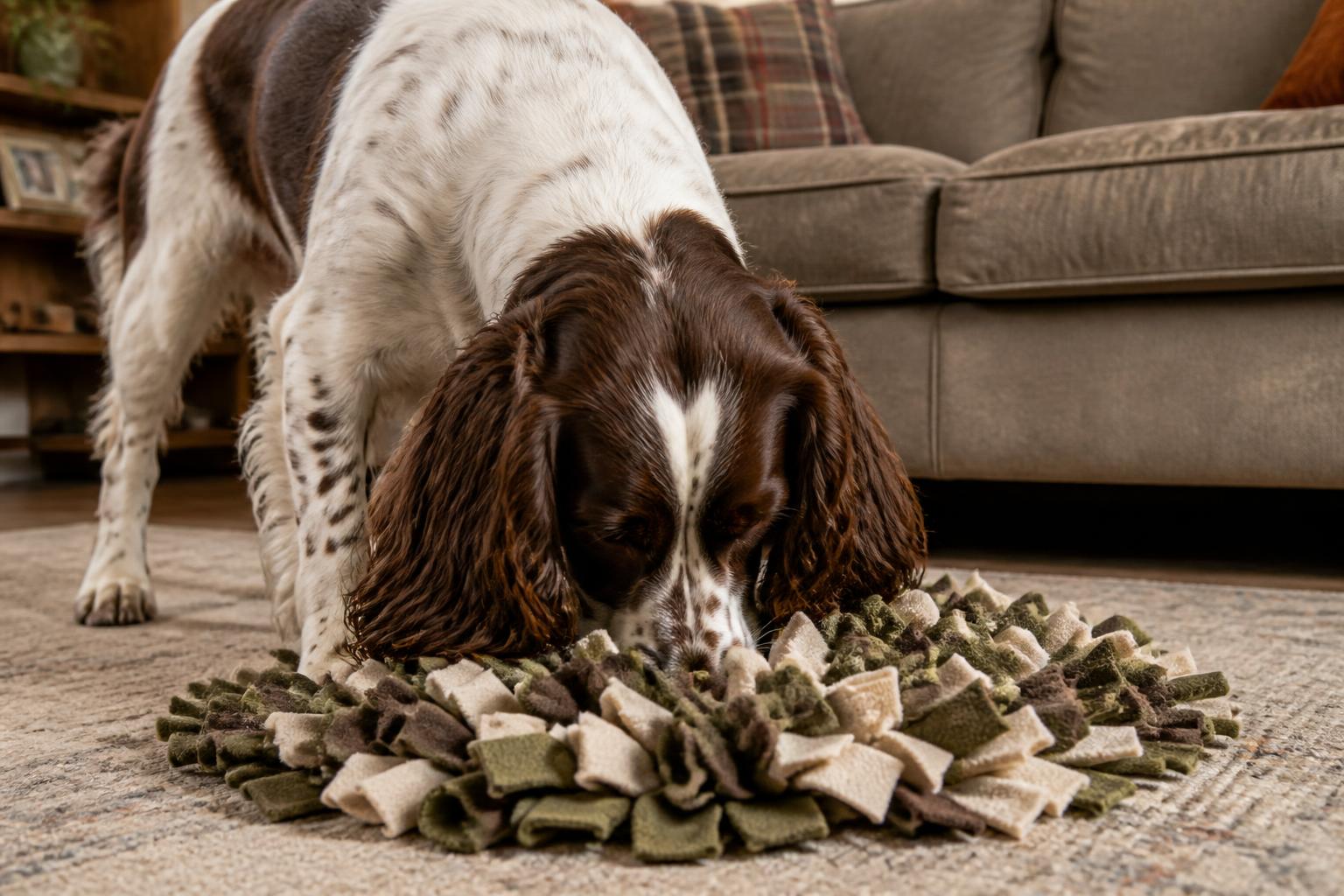
My working Cocker would happily spend six hours chasing a ball through the Cotswold mud, but I have learned that ten minutes of nose-work exhausts his frantic brain far more effectively. Snuffle mats are my secret weapon for those drizzly afternoons when the fields are waterlogged and my dog is bouncing off the kitchen walls. I once made the mistake of using a flimsy version that ended up as shredded confetti, so I am sharing the sturdy designs that actually survive a Spaniel’s enthusiasm.
I have narrowed down the most durable mats that turn a handful of kibble into a rewarding scent-work challenge for your pup. Choosing the right texture and depth is vital for keeping their busy minds engaged without causing frustration. I will help you find a mat that stands up to vigorous sniffing while providing the mental fatigue your high-energy companion craves.
How Snuffle Mats Harness Your Spaniel’s Scenting Superpowers
Engaging your dog’s nose can transform a rainy afternoon in the Cotswolds from a chaotic mess of chewed slippers into a calm, focused training session. While we often focus on the legs, a Spaniel’s most powerful tool is actually tucked right under their snout. These breeds possess up to 300 million olfactory receptors, making their sense of smell thousands of times more acute than our own.
I first discovered snuffle mats when my working Cocker was recovering from a minor paw injury. Unable to do our usual muddy three-mile trek, I needed a way to drain his energy without him moving an inch. It turns out that 15 minutes of sniffing is roughly equivalent to an hour’s walk in terms of the mental drain it provides, which is a lifesaver when the British weather is doing its worst.
The Best British Snuffle Mats for Heavy Use
In my experience, the quality of the fabric makes or breaks these toys. You want something that can survive the “Spaniel scrabble”-that frantic digging motion they do when they know a piece of kibble is hiding deep in the layers. Most high-quality mats in the UK are made from thick fleece or felt strips sewn into a heavy rubber or fabric base.
I generally recommend two specific brands that I’ve found to be the most durable for my lot:
- K9 Pursuits: These often feature varied textures and longer “grass” strips that make the search more challenging.
- Rosewood: A great entry-level option usually found for around £15 to £20 in most UK pet shops.
- Machine Washable: Ensure any mat you buy is 100% washable; Spaniel slobber and hidden treats eventually create a funky smell you won’t want in your living room.
- Anti-Slip Base: Look for mats with a beaded bottom so your dog doesn’t end up “surfing” the mat across the kitchen tiles.
Pro Tip: To stop your Spaniel from simply picking the mat up and shaking it to release the treats, start by placing the food right on top of the fleece before gradually burying it deeper as they learn the game.
Slowing Down the Speedy Eaters
If your dog inhales their dinner in three seconds flat, a snuffle mat is a fantastic alternative to a standard bowl. I used to worry about my youngest dog choking because he ate so fast, but switching his dry kibble to a mat forced him to use his brain and his nose to find every morsel. It turned a three-second gulp into a ten-minute activity.
Setting one up is simple: just sprinkle the dry food across the mat and ruffle the fabric with your hand to hide the pieces. It’s an enrichment staple that keeps them occupied while you’re trying to have a cup of tea or finish a work call. Just keep an eye on them the first few times, as some Spaniels might decide the fleece itself looks like a tasty snack.
While these mats are perfect for dry treats and kibble, they do have their limits when it comes to wet food or more complex “problem-solving” movements. If your dog masters the art of the sniff and starts looking for a more mechanical challenge involving moving parts and lids, you’ll likely want to look into more rigid structures that require a different kind of persistence. Interactive Puzzle Feeders That Actually Work >
I learned the hard way that a bored Cocker Spaniel with a full stomach is a recipe for chewed skirting boards and stolen socks. My own dogs taught me that making them work for their dinner is the secret to a quiet evening, provided the equipment actually stands up to a Spaniel’s persistent brain.
I’ve tested countless gadgets in my muddy Cotswold kitchen to find the ones that provide genuine mental fatigue rather than just frustration. I’ll share my top picks for feeders that challenge their natural foraging instincts and keep those busy noses occupied during the wet British winters.
Putting Your Spaniel’s Problem-Solving to the Test
I’ve found that switching from a standard bowl to a complex puzzle feeder is the quickest way to turn a frantic ten-second meal into a twenty-minute brain workout. While scent-based mats are a brilliant starting point, my working Cockers eventually needed something that required more than just a nose; they needed a physical challenge that forced them to think through a sequence of movements.
In my experience, interactive puzzle feeders are the logical next step for a dog that has mastered basic foraging. These toys range from simple wobbling dispensers to intricate boards with sliders, flippers, and drawers. I tend to reach for these when I need to manage those “witching hour” energy bursts that Spaniels often get just as I’m trying to sit down for my own dinner in the evening.
Matching the Difficulty to Your Dog’s Brain
I always advise owners to look at the difficulty rating before buying, as a Spaniel who gets too frustrated might decide that chewing the plastic is easier than solving the game. The most well-known brand in this space is Nina Ottosson, whose toys are conveniently rated from Level 1 (Easy) to Level 4 (Expert). I usually start my dogs on a Level 2 “Intermediate” game to see if they prefer using their paws or their muzzles to move pieces.
If you frequent UK pet shops, you’ve likely seen the Trixie Dog Activity range. These are fantastic for variety, often mixing different types of obstacles like cones that must be lifted straight up and sliders that move laterally. I’ve noticed that mental challenges like these can be a massive help for anxious dogs, with some studies suggesting they can reduce separation anxiety in up to 40% of cases by providing a positive focus when the owner leaves.
My Tried and Tested Favourites
When choosing a feeder, I weigh up the material durability against the complexity of the task. Harder plastic is easier to clean, but it can be noisy on tiled kitchen floors. Here is how I categorise the ones I use most often in my own home:
| Toy Type | Best For | Typical Price |
|---|---|---|
| Kong Wobbler | High-energy nudgers | £15 – £20 |
| Level 3 Puzzle Board | Advanced problem solvers | £25 – £35 |
| Rolling Treat Pods | Quiet, rubber-based play | £10 – £18 |
The Kong Wobbler is a staple for me because it can hold up to 1 cup of food, making it a viable replacement for a food bowl. It unscrews easily, which is a godsend when you’re dealing with the inevitable slobber and crumbs. However, it is worth noting that while these plastic puzzles are great for brain work, they aren’t designed to be gnawed on. If your Spaniel is the type to “solve” a puzzle by biting through the lid, you’ll need to supervise them closely or transition to more robust rubber toys designed for heavy chewers.
Pros and Cons of Puzzle Feeders
Pros
- Significantly slows down “hoover” eaters who gulp their food.
- Provides a structured way to burn off steam indoors on rainy Cotswold days.
- Easy to clean in warm soapy water compared to fabric-based toys.
- Builds confidence in shy dogs as they learn to manipulate objects.
Cons
- Plastic components can be noisy on hard floors.
- Cheaper models can be flipped over by a clever dog to skip the game.
- Requires a bit of “teaching” time initially to show them how sliders work.
I generally find that a well-chosen puzzle keeps my dogs occupied for at least fifteen to twenty minutes. It’s a measured, analytical kind of play that leaves them far more settled than a high-intensity game of chase would. Just keep an eye on the plastic edges; once they start showing signs of wear from enthusiastic teeth, it’s time to swap them out for something more durable.
I learned the hard way that a bored Cocker Spaniel with a powerful jaw is a recipe for shredded sofa cushions and expensive vet bills. After years of trial and error in my drafty Cotswolds cottage, I have finally narrowed down the specific toys that can actually withstand a Spaniel’s relentless chewing while keeping their busy minds occupied.
My selection focuses on those rare, rugged finds that offer more than just durability; they provide a vital outlet for that natural urge to gnaw and solve puzzles. I want to share my top picks that have survived my own dogs’ “destruction tests,” ensuring you invest in gear that offers genuine mental fatigue rather than just a five-minute distraction.
Finding a toy that outlasts a Spaniel’s persistent gnawing requires moving beyond standard plushies toward high-density materials designed for heavy impact. While many owners focus on fetch, the physiological need to chew is a separate drive that, if ignored, usually results in the tragic demise of your skirting boards or favorite trainers.
Hardwearing Solutions for High-Energy Chewers
I learned the hard way that a “tough” toy in a supermarket isn’t the same as a Spaniel-tough toy after my working Cocker, Barnaby, turned a regular rubber bone into confetti in minutes. He once systematically removed the legs from a pine coffee table because I hadn’t provided a suitable outlet for his endorphin-seeking behavior.
Chewing isn’t just a destructive habit; it is a biological necessity that releases calming hormones. I’ve seen it work wonders for high-strung Springers. Beyond the mental shift, the mechanical action of gnawing provides significant dental benefits, often leading to a plaque reduction of up to 30% when used consistently.
Top-Tier Durable Recommendations
I generally steer my clients toward two specific brands that have survived my own “Spaniel stress tests” over the years. These materials are engineered to withstand the unique scissor-like jaw action that Spaniels use to deconstruct their toys.
- KONG Extreme: This black rubber formula is virtually indestructible and far denser than the standard red version. I find it essential for dogs that have already graduated from “power chewer” status.
- Nylabone Power Chew: This range is a consistent top seller for a reason. It is made from tough nylon that bristles during use, which helps clean teeth while satisfying the urge to crunch.
- Ethically Sourced Antlers: For a natural alternative, I always look for UK-supplied deer antlers. They are incredibly long-lasting and don’t splinter like cooked bones, making them a staple in my kitchen.
Comparing Chew Toy Durability and Use
I’ve put together this comparison to help you decide which material fits your dog’s current destruction level. In my experience, it is better to over-spec the durability than to risk a choking hazard from a toy that is too soft.
| Toy Type | Material | Best For | Durability Rating |
|---|---|---|---|
| KONG Extreme | Heavy-duty Rubber | Aggressive Chewers | 5/5 |
| Nylabone Power | Infused Nylon | Dental Health | 4/5 |
| UK Deer Antler | Natural Bone | Long-term Focus | 5/5 |
| Cotton Rope | Natural Fibre | Interactive Play | 2/5 |
Safety and Selection Strategy
When I’m picking out a new chew for a client’s dog, I use the “thumbnail test”-if the material is so hard that it has absolutely no give when you press your nail into it, it might be too hard for senior dogs or puppies with developing teeth. However, for a prime-age Spaniel, durability is the priority to ensure the toy doesn’t end up as a vet bill.
I always suggest supervising the first few sessions with a new item. Even the most virtually indestructible rubber can develop weak points over months of use. I make it a habit to check Barnaby’s stash every Sunday morning, tossing anything that shows deep cracks or missing chunks.
While these toys are fantastic for independent time, I often find that the most engaged Spaniels are those whose owners eventually transition from “here, chew this” to “let’s play together.” You’ll find that once they’ve satisfied that physical urge to gnaw, they are much more focused for the type of active, owner-led games we will explore when looking at moving targets and retrieval.
Stick to the Nylabone Power Chew range if you have a dog that treats every toy like a personal challenge. It’s much cheaper than replacing a sofa leg, and your Spaniel will be significantly more relaxed for it.
My working Cocker once dismantled a sofa because I forgot that a tired body doesn’t always mean a quiet mind. I’ve learned the hard way that a simple treat-dispensing ball is my best weapon against that famous Spaniel mischief, especially when the Cotswold rain keeps us indoors. These toys transform a boring snack into a rewarding scent-work challenge that burns more mental energy than a three-mile hike through the mud.
I’ve tested dozens of designs to find the ones that actually survive a determined Springer’s jaw without being impossible to clean. I’ll share my top picks for keeping your dog focused and calm, ensuring they use their nose rather than your furniture to find entertainment. These specific balls are the ones I carry in my own kit bag every single day.
Treat-Dispensing Balls I Always Recommend
Ditch the stationary bowls and get your Spaniel moving by making their food roll across the kitchen floor. I’ve found that adding a movement component to mealtime taps into that deep-seated hunting drive that every working breed carries in their DNA. It turns a boring two-minute gulp-fest into a twenty-minute physical and mental workout.
The Bob-A-Lot by Starmark is my go-to recommendation for owners who want to feed an entire meal in one go. Because it has a weighted base, it wobbles and tips but never fully falls over, which keeps my Cocker Spaniel, Barnaby, busy for ages as he learns the exact nudge required to drop a piece of kibble. It features adjustable openings, so I can make it incredibly easy for a beginner or tighten it up to provide a serious dexterity challenge for an expert.
Soft Materials for Sensitive Souls
Not every Spaniel wants a hard plastic toy clattering against their skirting boards. For the more sensitive dogs, or those who prefer a “squishier” mouthfeel, the Planet Dog Orbee-Tuff Snoop is a masterclass in design. It is made from a soft, pliable material that you can pop inward to load with treats and then pull back out to create a narrow neck.
I personally love the Snoop because it’s translucent, allowing the dog to see the reward inside, which builds massive confidence in timid learners. It’s also much quieter on hardwood floors than the heavy-duty plastic alternatives. While it’s great for indoor play, I often take it into the garden to let the dogs “hunt” for it in the long grass, which adds an extra layer of scent work to the game.
High-Drive Options and Outdoor Skill
If you have a high-drive Spaniel that lives for the chase, Tug-E-Nuff’s Food Bag Ball is a brilliant hybrid. It combines a treat pouch with a ball shape, allowing me to throw it as a reward during training sessions. It is particularly popular for dogs that need a high-value incentive to return a toy to their handler, as they know the “prey” they just caught contains their favorite liver cake.
Regular use of these rolling dispensers does more than just stop boredom; it significantly improves canine dexterity. I’ve watched my dogs go from frustrated pawing to surgical-level nose nudges over a few weeks. It’s a joy to see that “lightbulb moment” when they figure out the physics of the release mechanism.
Pros
- Provides both light physical exercise and intense mental focus.
- Slows down fast eaters, reducing the risk of digestive upset.
- Can be used for entire meals or short bursts of high-value activity.
- Encourages independent problem-solving skills.
Cons
- Hard plastic versions can be noisy on tiled or wooden floors.
- Treats can occasionally get stuck if they are larger than the exit hole.
- Requires regular cleaning as saliva and food dust build up inside.
I integrate these into my daily routine by using a ball for their breakfast, especially on those typical rainy Cotswold mornings when a long walk isn’t immediately appealing. It burns off that initial “zoomie” energy before I start my workday. I’ve noticed that after a session with a weighted dispenser, my dogs are far more settled and ready for a nap.
While watching a Spaniel nose a ball around the room is satisfying, some dogs crave a different kind of connection-one where they can test their strength directly against yours. This leads naturally to the world of high-energy gripping games where the toy becomes a bridge between you and your dog’s natural competitive spirit.
I’ve learned the hard way that a bored Cocker Spaniel with a high prey drive will quickly find their own “tug toy” out of my favourite woolly jumpers or the kitchen towels. Interactive tugging isn’t just a game of strength; it’s my secret weapon for building a rock-solid bond while draining that relentless working-dog energy without needing a five-mile hike in the Cotswold rain.
I want to share the specific gear that survived my own trial-and-error sessions so I can help you choose tools that satisfy those natural thrashing instincts safely. I’ll show you how the right tug toy can transform a simple living room play session into a high-value training tool that leaves your Spaniel happily exhausted and your sleeves finally intact.
The Best Tug Toys for Interactive Play Sessions
The “two-toy” rule is my secret weapon for managing a Spaniel’s intensity during tug-of-war. While independent chew toys are great for quiet time, nothing builds a stronger bond than an owner-led game of tug. It’s a high-octane physical and mental release that taps into their natural desire to grip and pull, provided you follow a few simple rules to keep it safe.
Why Tug is a Mental Powerhouse
I’ve found that many owners shy away from tugging because they worry it encourages aggression, but as a behaviourist, I see the opposite. When we play together, I’m using the toy as a tool to teach impulse control. By asking my Spaniel to “sit” or “wait” before the game begins, and insisting on a clean “drop it” to end the round, I’m sharpening their brain even while their heart rate is soaring.
Short, intense sessions of 5 to 10 minutes are the sweet spot for a Spaniel’s attention span. This isn’t just about neck strength; it’s a cooperative exercise where they have to listen to my cues through the adrenaline. It’s a fantastic way to drain that frantic “zoomie” energy on a wet afternoon in the Cotswolds when a long hike isn’t on the cards.
Pro tip: Always pull the toy side-to-side rather than up and down to protect your Spaniel’s neck and spine from unnecessary strain.
Top Picks for Tugging Success
The material of the toy matters immensely depending on your dog’s confidence level. For sensitive dogs, I often start with soft fleece or fake fur options that feel rewarding in the mouth. For the more enthusiastic “land sharks,” rubber or heavy-duty firehose materials provide the resistance they crave.
- Tug-E-Nuff Bungee Tugs: These are incredibly popular with UK trainers because the bungee handle absorbs the shock of the pull. This protects both my shoulder and my dog’s neck during those vigorous head-shakes.
- KONG Safestick: I use this as a durable alternative to real sticks, which can splinter and cause horrific mouth injuries. It’s flexible, easy to grip, and stands up to the “grip and hold” style of play Spaniels love.
- Sheepskin Chasers: These are brilliant for building drive in dogs that are a bit reluctant to play. The scent and texture of the real fur usually trigger an immediate “must-have” response.
Pros and Cons of Structured Tugging
Pros
- Builds a deep bond and focus between you and your dog.
- Provides a high-intensity workout in a very small physical space.
- Perfect for reinforcing the drop it command under high distraction.
- Boosts confidence in shy dogs through winning controlled “battles.”
Cons
- Can lead to over-arousal if the owner doesn’t enforce regular breaks.
- Requires active participation; you can’t just leave them to it.
- Risk of accidental “nips” if the toy handle is too short.
I always make sure to keep the toy moving like prey-low to the ground and darting away-to keep the interest high. If the toy goes dead and still, the game ends, which teaches them that I am the source of the fun. This structured approach ensures they don’t just see the toy as an object to possess, but as a gateway to a shared activity.
While mastering the “drop it” command during a heated game of tug is a massive win for obedience, it’s only one way to tap into their working heritage. There is an entirely different level of mental exhaustion that comes when they stop using their eyes and start using their most powerful tool: their nose.
I have spent many muddy afternoons in the Cotswolds watching my working Cocker follow a trail that I can’t even see, which taught me that a Spaniel’s nose is their greatest superpower. While I used to think a long walk was enough, I soon realised that ignoring their olfactory instincts led to my slippers being shredded in protest.
My own “oops” moments with bored dogs led me to discover how scent-based play can tire a Spaniel out faster than a three-mile hike. I want to show you how the right tools can turn your living room into a search-and-rescue playground. You will discover how these specific toys tap into their natural hunting drive to provide the deep mental calm every high-energy dog needs.
Scent Training Toys to Sharpen Their Noses
Back in 2018, I realised my working Cockers were bored of the same garden drills, so I moved beyond basic food-finding to formal scent work. While snuffle mats are a fantastic introduction to using their noses, dedicated scent training toys tap into a Spaniel’s deep-rooted olfactory drive. It is about more than just finding a biscuit; it is about teaching them to identify and alert you to a specific aroma, which provides a level of mental fatigue that a three-hour hike in the Cotswolds simply cannot match.
I have found that scent work is particularly transformative for shy or nervous Spaniels. Because the “win” is entirely driven by their own natural talent, it builds a massive amount of confidence. I prefer toys that allow me to hide a scent article-like a piece of cloth infused with a specific oil-rather than just food, as it shifts the focus from “I’m hungry” to “I’m working.”
Getting Started with “Find It” Games
If you have never tried this before, start small. I made the mistake of hiding items in the garden during a breezy afternoon for my first go, and the scent trail was all over the place, leaving my dog confused and frustrated. Start in a quiet room with zero distractions. You want to use specialised kits, like the K9 Pursuits Scent Game starter kit, which provides the basic tools to transition from food-based searching to specific scent detection.
- Introduce the Target Scent – Place a scented article inside a container and reward your Spaniel the second they sniff it. I use Paws Made UK scent boxes because they are sturdy enough to withstand an over-excited paw swipe.
- Create Simple Hides – Place the scent box in plain sight and encourage your dog to find it. At this stage, you are just building the association that “this specific smell equals a reward.”
- Increase the Search Area – Move the hide to a different room or tuck it behind a chair leg. I love using scent cones for this because they allow the aroma to drift upwards, making the “find” more challenging as the dog enters the scent plume.
- Progress to Multiple Articles – Once they are pros, I set out three or four identical boxes, but only one contains the target scent. This forces them to use their brain to discriminate between “empty” and “hot” targets.
The Best Tools for the Job
I have tested various setups, and I’ve found that the quality of the kit matters for longevity. Paws Made UK offers excellent scent articles and boxes that are designed for the “muddy reality” of British dog training. They don’t get soggy or lose their shape after a few sessions in the damp grass.
| Toy Type | Best For | Complexity Level |
|---|---|---|
| Scent Boxes | Beginners / Indoor Play | Low |
| Scent Cones | Outdoor Directional Work | Medium |
| Scented Dummies | Advanced Working Lines | High |
Pros
- Taps into the natural hunting instincts of working Spaniel lines.
- Provides profound mental satisfaction that calms high-energy dogs.
- Can be practiced in small flats or rainy living rooms.
- Builds a unique “teamwork” dynamic between you and your dog.
Cons
- Requires a bit more setup time than just throwing a ball.
- Some kits can be pricey if you buy professional-grade oils.
- Over-enthusiastic Spaniels might try to “retrieve” the scent box rather than just indicating it.
I genuinely believe scent work is the “gold standard” of enrichment. It moves the needle from simple distraction to genuine skill development, which is why I always have a scent kit tucked in my cupboard for those days when the weather is too grim for the fields. It prepares their minds for more complex tasks, like the precision required when they need to hold an object and return it directly to your hand.
I have spent countless mornings in the muddy Cotswold hills watching my working Cockers sprint until they are breathless, yet they still return home with a restless glint in their eyes. I quickly learned that traditional ball-throwing often just creates a fitter, more hyperactive dog rather than a calm companion. To truly tire my dogs, I had to find toys that engage their natural desire to hunt and carry.
My personal collection of retrieve gear focuses on tools that turn a simple game of fetch into a sophisticated brain workout. I have tested these picks to ensure they withstand the enthusiastic grip of a Spaniel while providing the mental fatigue necessary for a quiet evening. I will show you which designs actually encourage focus and how my own trial-and-error can save your flowerbeds from boredom-induced digging.
How Intentional Fetch Games Beat Mindless Chasing
A soggy tennis ball found in a Cotswold hedgerow is often a Spaniel’s greatest treasure, but mindlessly hurling it across a field rarely provides the mental exhaustion these working breeds actually crave. While physical exercise is a given, I’ve learned the hard way that a Spaniel who only runs in straight lines becomes a very fit, very bored athlete who still paces the kitchen floor at 7:00 PM.
To truly settle a high-energy dog, I focus on retrieving-the specific act of finding, carrying, and delivering an object-rather than just the chase. This taps into their core breed traits, turning a simple park run into a complex job that requires focus and self-control. I always avoid natural sticks because of the high risk of splinters or throat injuries, opting instead for tools that can survive a bit of “Spaniel mouth” and muddy British winters.
My Go-To Gear for the Local Park
I’ve spent a small fortune on gear over the years, and for me, the Chuckit! range is the gold standard in the UK. Their launchers allow me to get some distance without throwing my shoulder out, but it’s the Ultra Ball that wins for durability. Unlike standard tennis balls, the rubber doesn’t act like sandpaper on a dog’s teeth when it gets covered in grit.
When I want to add a bit of variety or work on long-distance focus, the Nerf Dog Blaster is a brilliant bit of kit. It launches balls much further than I ever could by hand, which is great for wide-open spaces. For dogs that prefer a bit of “give” in their mouth, the Kong Classic is a staple in my bag; its unpredictable bounce keeps them guessing, and it’s tough enough to handle a Cocker who likes to give his toys a good squeeze on the return journey.
Adding a Mental Layer to the Game
The secret to a tired Spaniel isn’t the distance of the throw, but the rules of the game. I never just throw the ball and let them bolt. Instead, I use these toys to practice “memory retrieves.” I’ll sit my dog, walk twenty paces to hide the toy in some long grass, and then walk back before giving the command to go find it. This forces them to use their brain to remember where the object landed rather than just following movement.
Teaching a solid drop command is also non-negotiable for these sessions. It turns a game of “keep away” into a structured exchange where I am the source of the fun. Sometimes I’ll throw two balls in opposite directions and use directional retrieves, pointing left or right to tell my dog which one to pick up first. This level of communication is what builds that famous Spaniel-owner bond.
Safe and Durable Retrieve Options
| Toy Type | Best Feature | Spaniel Benefit |
|---|---|---|
| Chuckit! Ultra Ball | Easy-clean rubber | Gentle on teeth; high visibility |
| Nerf Dog Blaster | Hands-free pickup | Great for high-drive distance work |
| Kong Classic | Extreme durability | Erratic bounce builds focus |
While these games are fantastic for burning energy when I’m at the end of the lead, I also recognize that life gets busy. There are times when I’m stuck on a work call or the weather is truly abysmal, and that’s when I look for toys that allow my dogs to entertain themselves without my constant input.
Pros of Structured Fetch
- Builds a strong “stop and wait” impulse in high-drive dogs.
- Provides both physical conditioning and mental “problem solving.”
- Strengthens the working bond through clear hand signals.
- Tires the dog out faster than a standard walk.
Cons of Structured Fetch
- Can be high-impact on a dog’s joints if done on hard ground.
- Requires consistent owner participation and focus.
- Over-arousal can lead to “ball obsession” if not managed.
I find that a twenty-minute session of “find the hidden ball” in the woods is worth an hour of walking on the pavement. It’s about making the dog work for the reward, ensuring they return home with a wagging tail and a heavy head, ready for a long nap.
I have spent many muddy afternoons in the Cotswolds trying to settle my working Cocker after a walk, only to find him still bouncing off the walls. Through plenty of trial and error, I discovered that engaging my dog’s tongue is often more effective than another mile on the lead for achieving true calm.
I rely on lick mats as my secret weapon for turning a high-energy Spaniel into a relaxed companion during those frantic evening hours. I will share my favourite ways to use these tools to curb boredom and explain why this simple activity is a game-changer for your dog’s mental well-being.
Licking is a Spaniel’s natural off-switch. While high-octane retrieval games satisfy the physical drive, the biological act of licking triggers the release of serotonin and endorphins. These are the “feel-good” hormones that lower a dog’s heart rate and provide a deep sense of security, which is why I consider these mats an essential part of a balanced toy box.
The Science of Settling Down
I’ve found that a good session with a textured mat can reduce stress levels by up to 60% during high-pressure moments like vet visits or thunderstorms. It isn’t just about the food; it’s about the repetitive motion. For a busy working Cocker, shifting from a high-energy walk to a quiet house can be a jolt, so I use these tools to bridge that gap and prevent “post-walk zoomies.”
In the UK, the LickiMat brand is the undisputed leader, with specific models like the Buddy (cross-shaped maze) and the Soother (tiny bumps) being widely available in most pet shops. Each texture provides a different sensation. The Soother is particularly effective for runny liquids, while the Buddy offers more resistance for thicker pastes, making the dog work harder to cleared every nook.
Pro tip: If your Spaniel is a “chewer” rather than a “licker,” opt for the Tuff versions of these mats, which feature a rigid polypropylene base to prevent them from being shredded in seconds.
My Top Spreadable Toppings
You don’t need fancy gourmet pastes to make this work. I usually reach for whatever is in my kitchen cupboard, provided it’s dog-safe. The key is to choose something with a consistency that can be pressed deep into the grooves of the mat.
- Xylitol-free peanut butter: Always check the label, as this sweetener is toxic to dogs.
- Plain Greek yoghurt: Great for gut health and very easy to spread.
- Mashed banana: A sweet treat that’s high in potassium.
- Wet dog food: I use this to turn a portion of their daily meal into a 20-minute activity.
- Sardine mash: Smelly, high-value, and packed with Omega-3s for a shiny coat.
Extending the Challenge
A standard mat might last ten minutes, but I’ve learned a trick to stretch that out. I pop the prepared mat into the freezer for two hours before giving it to my dogs. This simple step can extend the activity to 30-45 minutes, making it a perfect distraction when I need to jump on a work call or when the mud from a Cotswold hike needs to dry before I start grooming.
The Verdict: Lick mats are the ultimate low-effort, high-reward tool for emotional regulation. They transform a Spaniel’s frantic energy into a calm, focused state, proving that mental stimulation doesn’t always have to involve running. Of course, once you’ve mastered the art of using food to soothe, you might start looking at the recycling bin and wondering if those empty cardboard boxes could serve a similar purpose for free.
I have spent a small fortune on fancy puzzles over the years, yet my working Cocker often finds just as much joy in a discarded cardboard box. My bank balance took a hit before I realised that mental fatigue doesn’t always require a premium price tag or a trip to the pet shop. I want to show you how I transform my recycling bin into a scent-work playground that keeps my dogs quiet during those inevitable Cotswold downpours.
I will share my favourite low-cost secrets for keeping a high-energy Spaniel occupied without spending a penny. By raiding your kitchen cupboards, I can help you create clever DIY challenges that satisfy your dog’s natural urge to forage and problem-solve. These simple, homemade solutions are my go-to methods for preventing boredom when I haven’t had time to buy new equipment.
Spending a fortune on the latest gadgets isn’t necessary when your recycling bin is a goldmine for Spaniel entertainment. While I love a clever store-bought puzzle, I’ve found that my Cockers are often just as thrilled by a cardboard box as they are by a £20 plastic toy. Using what you already have can save you between £50 and £100 a year on pet supplies, which is more than enough to cover a few extra bags of high-quality training treats.
How Household Items Save Your Budget and Your Sanity
The beauty of DIY enrichment is the element of destruction. Spaniels have a natural urge to forage and “dissect,” and providing them with safe, home-made outlets for this prevents them from taking those urges out on your skirting boards or expensive trainers. I once spent an entire afternoon watching my youngest Spaniel systematically unwrap a nested series of cereal boxes, and she was more exhausted afterward than if we’d walked for miles in the rain.
Three Simple DIY Puzzles for Rainy Afternoons
- The Muffin Tin Challenge – Place small pieces of kibble or dried liver in the holes of a standard muffin tin and cover each hole with a tennis ball. Your Spaniel has to figure out how to nudge the balls aside or lift them out to reach the reward, which builds great problem-solving skills.
- The Foraging Box – Take a large delivery box and fill it with crumpled packing paper, empty toilet paper rolls, and a few old plastic bottles (lids and rings removed). Scatter a handful of treats throughout the layers; it creates a sensory experience that mimics hunting through undergrowth.
- The Towel Roll-Up – Lay an old towel flat, sprinkle treats across the surface, and roll it up tightly into a sausage shape. For an extra challenge, you can tie the towel in a loose knot, forcing your dog to use their nose and paws to unfurl the fabric and find the hidden “prey.”
Safety Considerations for Homemade Toys
I always supervise my dogs with DIY projects, especially when cardboard or paper is involved. While most Spaniels will just spit out the bits they tear off, some “gulpers” might try to swallow the packaging. Always remove any staples, plastic tape, or glue strips from boxes before letting your dog have at them. If your dog is a heavy chewer, avoid using thin plastic containers that could crack and create sharp edges.
Toilet paper rolls are a personal favourite of mine because they are the perfect size for a quick win. I simply fold the ends down to trap a few biscuits inside, creating a “cracker” that they have to rip apart. It’s messy, yes, but the mental fatigue it produces is worth the five minutes of sweeping up cardboard confetti later.
Rotating Your Homemade Collection
The trick to keeping these items exciting is never leaving them out for more than twenty minutes. If a cardboard box sits in the kitchen for three days, it becomes furniture; if it appears suddenly with treats inside, it’s an event. I keep a dedicated “boredom-busting” cupboard where I stash clean recycling and old linens specifically for these games.
Even the most creative DIY puzzle loses its charm if your Spaniel sees it every single day. The real magic happens when you combine these low-cost hacks with your existing toy stash to ensure no two days ever feel the same for your dog. If you find your dog is starting to solve these home-made puzzles too quickly, it might be time to look at how you manage the variety of their entire toy box to keep that “new toy” feeling alive for longer.
I learned the hard way that leaving every toy on the kitchen floor is a recipe for a bored, destructive Cocker Spaniel. My own dogs used to ignore their expensive puzzles within forty-eight hours until I mastered the art of the “toy disappearance act.”
I want to share my strategy for keeping that “new toy” excitement alive without spending another penny at the pet shop. By managing what my Spaniels can access, I ensure their high-energy brains stay sharp and my living room stays slightly less cluttered with half-chewed rubber.
How a Toy Rotation System Keeps Your Spaniel Engaged
Your Spaniel’s brain will stop responding to the same stimulus after just two weeks of daily use, making novelty the most powerful tool in your training kit. I’ve seen it happen dozens of times in the Cotswolds; an owner buys a top-tier puzzle, leaves it on the kitchen floor, and by day fourteen, their Cocker is back to eyeing the skirting boards for entertainment. This isn’t because the toy is bad, but because the novelty has evaporated.
Research into canine cognition shows that dogs are neophilic, meaning they are naturally drawn to new things. When we leave every toy in a heap in the corner, they become part of the furniture rather than a source of excitement. By implementing a structured rotation, you can actually increase the lifespan of your pet supplies by 50% because the items aren’t being constantly gnawed or ignored.
The Science of Boredom and Novelty
I learned the hard way that a bored Spaniel is a creative Spaniel, and usually, that creativity involves my upholstery. To combat this, you need to understand that mental fatigue is just as important as a long walk in the mud. If a toy is available 24/7, the dopamine hit associated with solving a puzzle or chewing a specific texture flatlines.
By hiding toys and bringing them back later, you trigger a “new toy” response even if the item is three years old. This strategy keeps their scent drive and problem-solving skills sharp. It’s the difference between eating your favourite meal every single night or having it as a special treat once a week.
Pro tip: When you bring a toy out of storage, rub it between your hands or place it in a bag with a few dried sprats for five minutes to “reset” the scent profile and instantly grab your dog’s attention.
Setting Up Your Three-Bin System
I recommend a simple “toy box” method to keep things manageable. Divide your entire collection into three separate batches, ensuring each group has a mix of textures and challenges. You want to aim for 3-5 toys available at any one time, while the rest stay completely out of sight in a high cupboard or a sealed bin.
To keep the engagement levels high, follow these steps for a successful rotation:
- Categorise by function: Ensure each batch contains one hard chew, one soft comfort toy, and one interactive puzzle.
- Store out of sight: Use a container that blocks scent so your Spaniel doesn’t spend all day staring at the “forbidden” toys.
- Rotate every 3-5 days: This timeframe is the sweet spot before the habituation phase kicks in and interest starts to wane.
- The “Wash and Reset” rule: Before putting a toy into storage, wipe it down to remove old saliva and let it dry completely to maintain hygiene.
- Observe and adjust: If your Spaniel ignores a specific toy for two rotations in a row, it’s time to donate it or change how you use it.
Categorising for Maximum Stimulation
When I’m sorting my own dogs’ gear, I look at the sensory profile of each item. A rotation that only includes three different rubber balls isn’t really a rotation; it’s just a slight variation of the same game. You need to provide a “buffet” of mental challenges to satisfy a working breed’s busy mind.
I find it helpful to think in terms of “work” and “rest” toys. One day might focus on a toy that requires heavy jaw work, while the next rotation focuses on a toy that rewards delicate nose work. This variety ensures that different parts of the Spaniel brain are being fired up throughout the week, preventing the “stale” feeling that leads to destructive digging or barking at the window.
| Toy Category | Primary Benefit | Ideal Duration |
|---|---|---|
| Hard Chews | Jaw strengthening & dental health | 20-30 mins |
| Puzzle Feeders | Problem solving & slowing meals | 15-20 mins |
| Comfort Toys | Self-soothing & quiet time | Unlimited |
| Scent Toys | Natural hunting instinct | 10-15 mins |
My personal method involves a “Sunday Swap.” Every Sunday evening, I gather up the current week’s toys and trade them for the next batch in the cupboard. Seeing my Cocker’s tail go like a windshield wiper when he sees a toy he hasn’t touched in ten days is proof enough that this low-effort system works better than any expensive gadget on the market.
A tired Spaniel is a happy Spaniel, but a mentally exhausted one is even better.
My years in the Cotswolds with working Cockers have taught me that physical exercise is only half the battle. If I only focus on the miles walked, I just end up with a very fit, very bored dog who can outrun me for hours. Real peace at home comes from tapping into their 300 million olfactory receptors and giving that busy brain a specific job to do.
I have seen firsthand how mental stimulation can reduce destructive behaviour by up to 70%. When I give my dogs a puzzle or a scent game, I am not just keeping them quiet; I am fulfilling a deep-seated breed instinct. It is the difference between a dog that paces the kitchen and one that curls up contentedly by my feet after a rainy afternoon indoors.
Key Takeaways for a Smarter Spaniel
- Sniffing equals sleeping: Just 15 minutes of dedicated scent work or snuffle mat time provides as much mental fatigue as a full hour-long trek through the woods.
- Rotate to stay relevant: Dogs often lose interest in toys used daily after just two weeks, so I keep a rotation of 3-5 items to increase toy longevity by 50%.
- Licking lowers stress: Using a lick mat can reduce a Spaniel’s anxiety levels by 60% during stressful events like vet visits or grooming sessions.
- Mix DIY with pro gear: You do not need a massive budget; a muffin tin with tennis balls can be just as challenging as a high-end Nina Ottosson Level 2 puzzle.
- Safety first: I always ditch the sticks in favour of rubber Safesticks or KONGs to avoid the nasty splinter injuries common in our high-drive breeds.
Two things you can do right now
Check your toy box today. Take out every toy your Spaniel currently has access to and put all but three into a cupboard. Mark your calendar to swap these for “new” ones in four days to instantly reboot their interest.
Set up a “find it” game. Grab a handful of kibble and hide five pieces around your living room while your dog waits. This simple act of scent work is the easiest way to start their mental enrichment journey before dinner tonight.
Stop trying to outrun a Spaniel and start outsmarting them instead.
Check out our Ultimate Guide to Spaniel Enrichment: 7 Ways to Tame High Energy & Anxiety