
It’s vital that you assess your Springer Spaniel’s recall reliability, strong prey drive, and reactions in real-world walking scenarios before letting them off-lead; many are highly trainable and eager to please, but others pose a serious risk near roads, livestock, or wildlife without consistent training and controlled exposure.
Key Takeaways:
- Reliable recall is achievable with early, consistent training and ongoing proofing, but may fail under strong distractions-always test recall before trusting off-lead.
- Springer spaniels have a strong prey drive and will chase wildlife; off-lead in wooded, rural, or wildlife-rich areas significantly raises escape and injury risk.
- Safe off-lead outings usually mean secure fencing or a longline, progressive distraction training, and experienced handling-avoid relying on voice recall near roads or livestock.
Springer Spaniel Recall Instincts
You’ll see your springer’s prey drive and scent focus frequently override commands, especially near birds or rabbits; many need structured activity-most require about 60-90 minutes daily-see How much exercise does a Springer Spaniel need? Your recall reliability improves with consistent rewards and staged distance work, while roads and livestock represent the most dangerous triggers for off-lead escapes.
Overview of Natural Instincts
Your springer was bred to flush and retrieve, so strong scenting and sudden directional changes are normal; juveniles show higher impulsivity and independence during a flush. In real-world walks you’ll notice them ignore cues when a scent takes over, so brief, frequent recall drills and controlled exposures help you manage that instinct.
Factors Influencing Recall
Age, exercise level, training history, and distractions all shape how reliably your dog returns: puppies and adolescents often have weaker recall reliability, while well-exercised adults perform better. High-value rewards, early socialization, and gradual exposure to busy environments raise success rates. Roads and wildlife are high-risk stimuli that amplify the prey drive and reduce obedience.
- recall reliability
- prey drive
- Assume that real-world walking scenarios require planning and progressive training before full off-lead freedom.
Practice recalls starting at 2-5 m on a long line, then extend to 20-30 m as you gain consistency; use high-value rewards and short 5-10 minute sessions, 2-3 times daily, and deliberately add distractions. Measure success-aim for 8/10 reliable returns in a new setting before increasing distance-and reduce off-lead time near roads or wildlife until you hit that benchmark.
- high-value rewards
- distance progression
- Assume that consistent practice and controlled exposure are required to maintain reliable off-lead recall.
Hunting Drive & Distractions
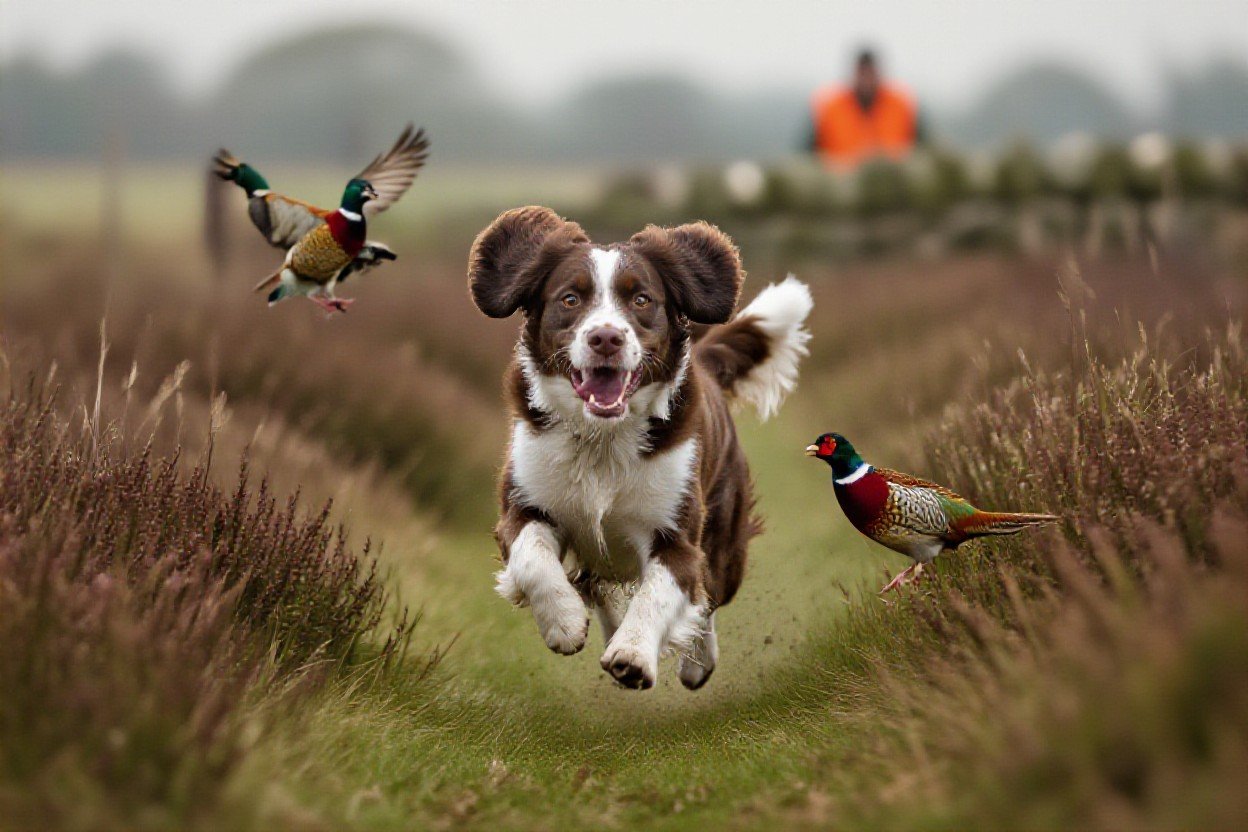
When you walk near fields or woods, your Springer’s strong prey drive can override recall the instant it scents or spots movement; you’ll see intense scenting, quartering and sudden chases toward birds or rabbits. In real-world walks this means relying on staged exposure-long-lines, progressive distance work and high-value rewards-and measuring progress against typical scenarios outlined in English Springer Spaniel: Characteristics & Care.
Understanding Hunting Instincts
Your Springer is bred to scent, flush and pursue; these behaviors are reflexive and can kick in at 10-100 meters depending on cover. Train in short 10-15 minute sessions, proof recall at increasing ranges, and reinforce immediate returns with top prizes so that recall reliability strengthens under distraction.
Common Distractions for Springer Spaniels
You’ll face birds, rabbits, squirrels, livestock, other dogs and irresistible smells, with moving targets being the hardest to counter. Near water, waterfowl and fetch-driven swimming can break focus, while in towns cars and cyclists are the most dangerous distractions that can nullify good recall.
In marshes your dog may bolt to flush ducks, and on farmland chasing sheep risks injury or fines; urban parks bring squirrels and bikes that trigger instant pursuit. Mitigate these by training with a long-line, adding a whistle cue, practicing “leave it” around live stimuli, and increasing distances gradually-work from 5m to 25m to 50m-to build dependable responses in the exact situations you encounter.
Training Recall From Puppyhood
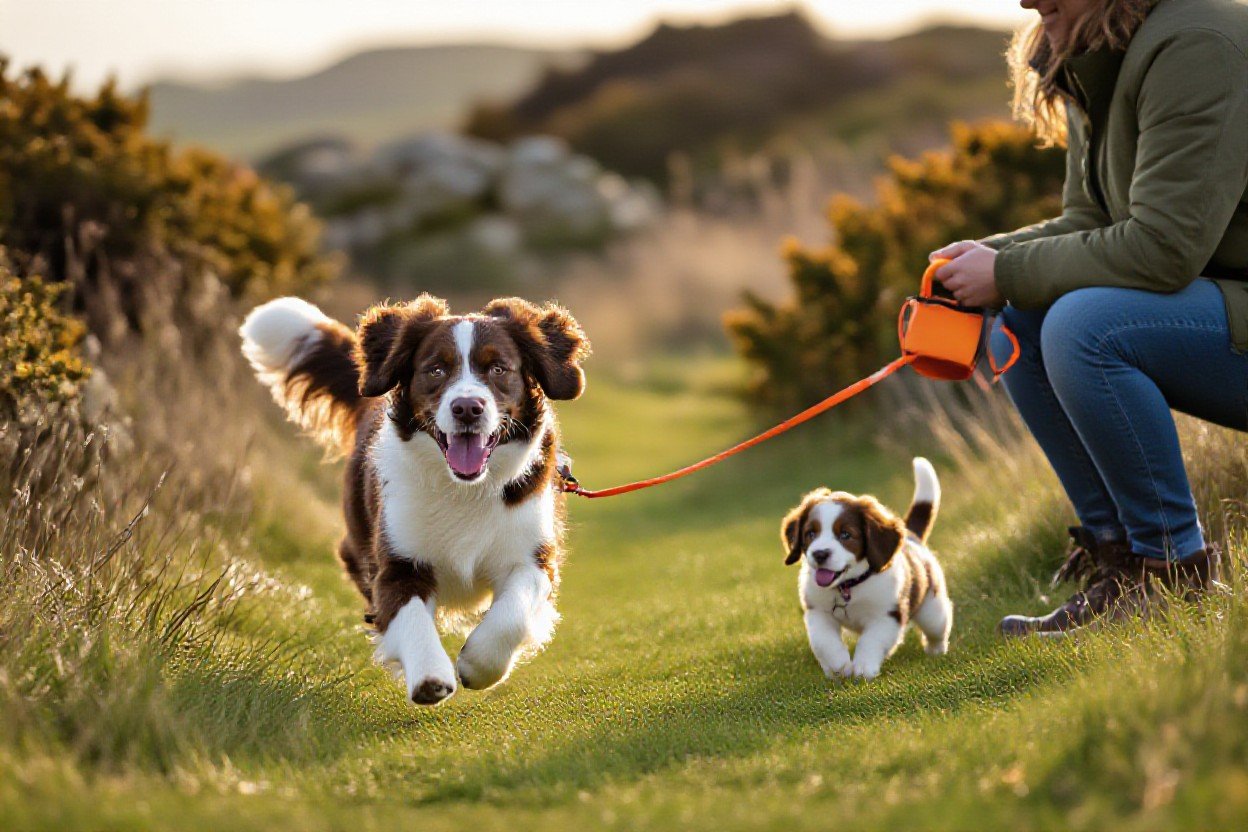
Start recall training as soon as you bring your puppy home: use 5-10 minute sessions, 3-5 times daily, rewarding with high-value treats like cooked chicken or a favorite toy. Keep your pup on a 5-10 m long line outdoors so you can safely increase distance while managing its strong prey drive. Teach name-first cues, reward instantly, and avoid off-lead outings near livestock or roads until your recall is consistently reliable.
Early Training Techniques
Inside, use low-distraction drills: say your puppy’s name, pause one second, then give the come cue and reward immediately with a treat or brief play. Use a clicker or a clear marker word, keep sessions to 3-5 minutes with 5-10 repetitions, and gradually add distance before moving outside. Introduce short recall games-hide-and-seek or fast recall for play-to build a positive association that outcompetes chasing instincts.
Building a Reliable Recall
Proof your recall across environments: move from yard to quiet park to busier fields, extending distance from 5 m to 20-30 m while on the long line. Pair verbal cues with a hand signal and consistently reward returning with a favored toy or treat so coming back is always the best option. Never punish a dog for returning, and postpone off-lead freedom near livestock or roads until reliability is proven.
Use a staged progression you can track: Stage 1 (1-2 weeks) indoors at 1-2 m; Stage 2 (2-4 weeks) fenced yard at 5-10 m on the long line; Stage 3 (4-8 weeks) add moderate distractions at 10-20 m; Stage 4 only let your dog off-lead in secure areas after >80% success over two weeks. Train an emergency recall with a unique cue and a mega-reward for when prey drive overwhelms your dog, and always prioritize safety around roads and livestock.
Common Off-Lead Problems
When you let a Springer off-lead, the most frequent issues are tied to recall reliability, high prey drive, and real-world distractions: your dog may bolt after a rabbit or flush a pheasant, ignore a whistle, or become overstimulated near other dogs. In open country recall can drop below 50% for many owners once wildlife appears, and that unreliable recall near roads is one of the most dangerous outcomes to watch for.
Behavioral Issues
Your Springer can fixate on a scent or target for minutes, tunneling into scent trails and ignoring commands until the chase ends. Reactive barking at unfamiliar dogs, resource guarding over found carrion, and opportunistic stealing of food are common; in trials owners report that off-lead training often needs consistent high-value rewards and frequent short sessions to regain control.
Safety Concerns
Roads, livestock, and water hazards top the list when your spaniel ignores recall: a bolt across an A-road or into a cattle field can lead to injury, fines, or transmission of ticks and other parasites. Unseen drains, barbed wire, and territorial farm dogs create real risks once your dog is out of sight.
In practical terms, a flushed wild animal can carry your dog out of sight within seconds and tens to hundreds of meters; in farmland that often means crossing fences or reaching busy lanes. Equip your dog with a GPS tracker, use a long line for phased freedom, and train an emergency recall with extremely high-value rewards so you can recover control when those high-risk moments occur.
Safe Places to Train Off-Lead
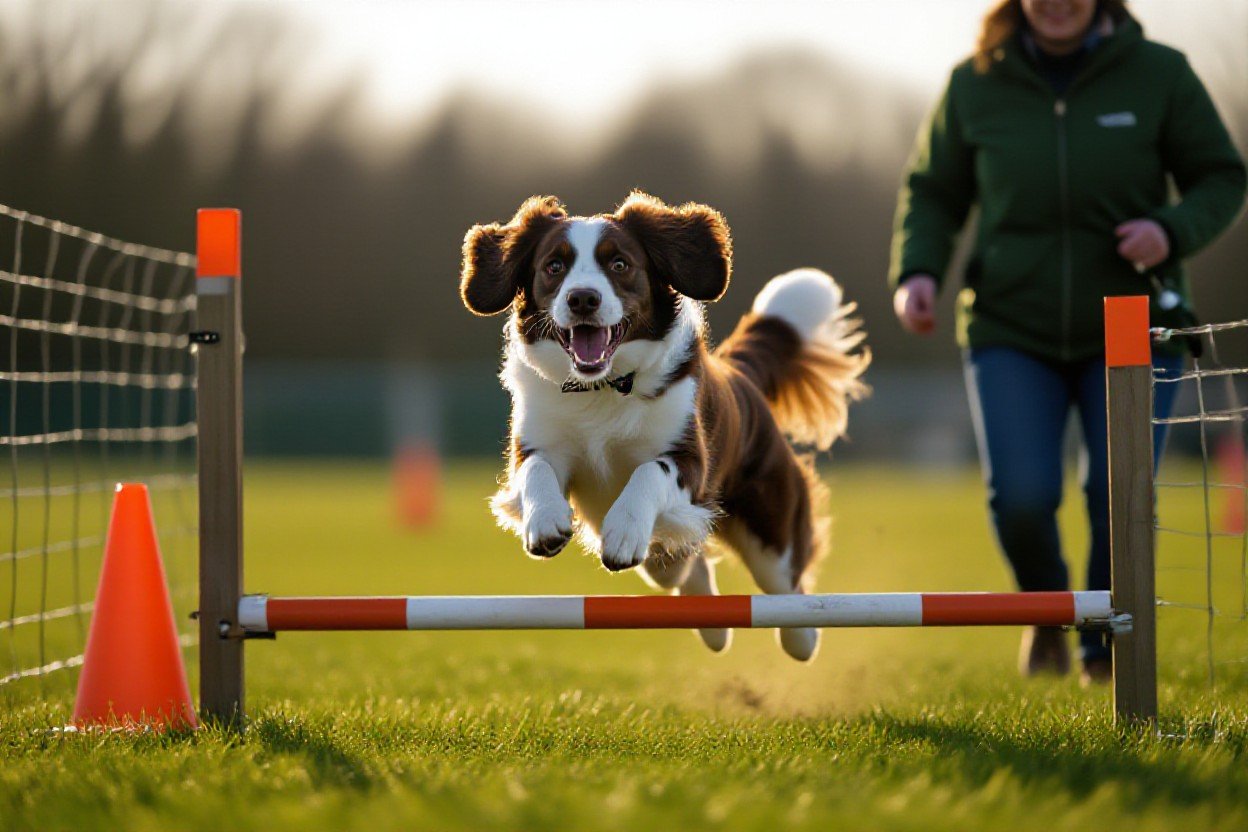
Pick sites that match your springer’s recall stage and prey drive: start where visibility is good (at least 30-50 m) and distractions are controlled, then progress to busier areas. Use staged exposures-first a fenced paddock, then a semi-open meadow, finally a quiet off-season beach-to build reliability in real-world walking scenarios. Test recall under increasing distraction and keep a long line handy until your dog responds reliably in two or three different environments.
Ideal Locations
Choose a fully fenced 1-2 acre field or a dedicated dog club field for early off-lead work; these give you distance and containment. Consider low-traffic beaches outside peak months, suburban parks with enclosed dog areas, or permission-based farms for scent-work drills. You should prefer sites where you can see approaching wildlife or dogs from far off and where you can create 10-20 minute focused recall sessions without interruption.
Avoiding Hazards
Steer clear of places with livestock, unfenced roads, or dense scrub that hides rabbits and deer, since a high prey drive can trigger an immediate chase; roads and livestock are the most dangerous hazards. Also avoid busy play areas with children or loose large dogs until your recall is solid, and obey local leash laws to prevent fines and confrontations.
Assess every site before letting your springer off-lead: walk the perimeter, note water depth and current, and look for holes, barbed wire, or baited traps. Start with a 10-20 m long line to simulate off-lead freedom while you test recall under moderate distraction. Keep high-value treats and a whistle ready so you can reinforce returns quickly if your dog locks onto a scent or spots wildlife.
When to Avoid Off-Lead Walking
When your springer is near busy roads, livestock, or during ground-nesting bird season, keep them on lead because even a usually reliable recall can be overwhelmed by scent or sight. Low visibility under 30-50 m, busy multi-use paths, and areas where children or cyclists gather all amplify risk. Young dogs or those with few controlled off-lead successes should remain leashed. Knowing that a single chase can cause injury, loss, or wildlife disturbance, err on the side of restraint.
Situational Considerations
In urban and semi-rural settings you must judge each outing: streets with >30 mph traffic, footpaths with frequent cyclists, or fields adjacent to roads are poor choices for off-lead work. During lambing, or when signs warn of nesting birds (typically March-July), your springer’s prey instincts spike and pursuit becomes likely. Use short trials with a long line when transitioning between safe and risky terrain. Knowing when to switch to a lead preserves safety for your dog and others.
- Traffic
- Visibility
- Livestock
- Bird-nesting season
- Distractions
Recognizing Risk Factors
Pay attention to behavioral indicators that signal a likely recall failure: sudden scent fixation, body stiffness, a hard stare into cover, or repeated checks toward hedgerows. Past incidents matter-if your dog has chased once in a given spot, the probability of repetition increases, particularly at dawn and dusk when birds are most active. Environmental cues like fresh game trails or recently harvested crops raise arousal fast. Knowing these signs lets you take immediate action to leash or redirect.
- Scent fixation
- Body tension
- Previous chases
- Field conditions
Track frequency and context: three recorded chases in the same habitat over a month indicates a pattern that demands stricter management. Conduct controlled long-line trials in transitional zones, note time-of-day and weather for each failure, and reduce off-lead access in high-risk seasons (spring to early summer). Use objective thresholds-number of failures, distance to road, and presence of livestock-to inform choices. Knowing your dog’s pattern provides clear boundaries for safe off-lead practice.
- Repeat chases
- Long-line trials
- Seasonality
- Activity logs
Conclusion
Taking this into account you should weigh your Springer’s recall reliability, strong prey drive and common walking scenarios before letting them off-lead; consistent training, graded exposure and secure areas reduce risk, but some environments mean you should keep them on lead for safety. See owner experiences at Springer Spaniels *Update post 22. She’s home! for practical insight.
FAQ
Q: Are Springer Spaniels generally good off-lead dogs?
A: Many Springer Spaniels can be excellent off-lead companions when they have reliable recall and are trained for distractions, but they are not automatically safe off-lead. Their intelligence, high energy and eagerness to interact make them highly trainable, yet individual temperament and the strength of prey drive vary widely. Assess each dog’s consistent response to recall commands across distances and environments before allowing off-lead freedom. In places with livestock, busy roads or abundant wildlife, keeping a springer on lead is often the safer choice regardless of past performance.
Q: How does prey drive affect a Springer Spaniel’s off-lead reliability?
A: Strong prey drive can override a recall, causing a dog to chase birds, rabbits or squirrels even when it usually responds well at home. Signs of high prey drive include intense stalking posture, fixed attention on small animals and sudden bursts of pursuit. To manage this, train impulse control and build a super-rewarded recall (very high-value treats or favorite toy) paired with consistent practice. Use staged exposure to small-animal triggers, long-line work to allow safe freedom while preventing full chases, and teach alternative behaviors like “leave it” and targeted play cues to redirect chase impulses.
Q: How should I test and train my Springer Spaniel for real-world off-lead walks?
A: Start with short-distance recall in a low-distraction indoor or fenced area until recall is absolutely reliable. Move to a long line in progressively distracting outdoor settings (parks, trails, beach) and practice recalls with high-value rewards, increasing distance and distraction slowly. Proof recall under realistic triggers: other dogs, wildlife, bicycles and food on the ground. Use an emergency recall cue with guaranteed reward for urgent returns. Monitor performance: fail-safe recall less than 90% under distraction means continue training and keep the dog on lead in risky areas. Always carry a long line or slip lead for sudden control, avoid off-lead outings near roads or livestock, and consult a qualified trainer if prey drive or inconsistency persists.